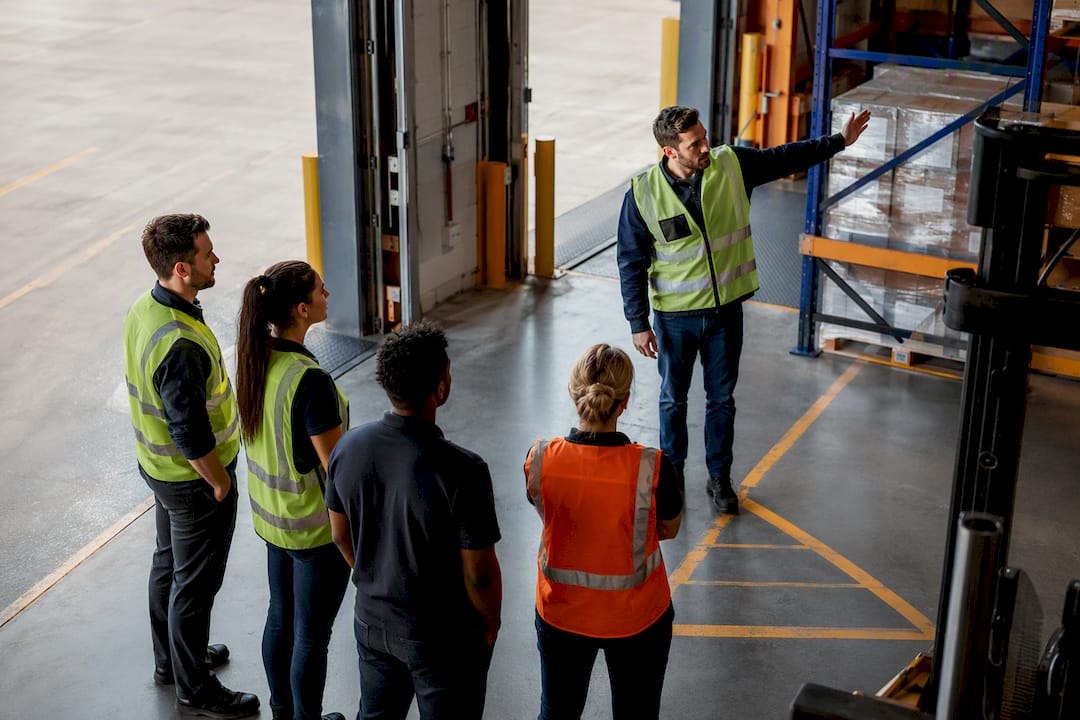
Run toolbox talks weekly, keep them between 5 and 15 minutes, and hold formal safety meetings monthly at minimum. This article gives you a categorized bank of ready-to-run logistics and warehouse safety meeting topics, facilitation tactics that turn lectures into conversations, a documentation checklist auditors expect to see, and a copy-pasteable 5 to 15 minute template anchored in OSHA, FMCSA, and NIOSH guidance.
TL;DR:
- Safety meetings should focus on the hazards relevant to current operations, such as forklift blind spots or dock hazards, not generic topics.
- Conduct meetings more frequently during busy periods, with toolbox talks daily or weekly, and always hold formal meetings at least once a month.
- Effective meetings involve open-ended questions, demonstrations, rotating presenters, and clear action items to improve engagement and retention.
- Proper documentation, including date, attendees, key points, and actions, should be retained for at least three years, preferably using digital signatures.
- Using safety management software automates recordkeeping, attendance tracking, and topic scheduling, reducing administrative burden and improving compliance.
Table of Contents
- A Topic Bank for Logistics Safety Meetings
- What Meeting Type Fits Your Operation?
- How Do You Make Safety Meetings Actually Land?
- What Should Your Meeting Records Actually Include?
- A Ready-to-Run 5 to 15 Minute Toolbox Talk Template
- Where Most Safety Meeting Programs Quietly Fail
- Cut the Administrative Drag Out of Your Safety Program
- Where to Verify the Standards Behind This Guide
- Sources
A Topic Bank for Logistics Safety Meetings
Most logistics safety meetings fail for a boring reason: the topic doesn’t match what’s actually happening on the floor that week. A generic slip-and-fall talk delivered to a forklift crew during a peak shipping surge lands flat because it ignores the hazard sitting right in front of the workers. Build your rotation around categories that map to your actual operation, then pull the specific topic from whatever near-miss or seasonal risk is live right now.
Powered industrial trucks and forklifts. Blind spots at intersections cause a disproportionate share of warehouse collisions. OSHA’s standard on powered industrial trucks requires pre-shift inspections and documented operator training. Demonstration idea: walk the actual blind spot zone on your dock and have a driver describe what they can’t see. Ask: “Where on this floor plan would you never step without checking twice?”
Loading dock hazards. Trailer creep, unsecured dock plates, and pedestrian crossovers at the door line cause injuries that rarely make headlines but show up constantly in claims data. Ask crews to point out the dock door where they’ve felt the least confident stepping onto a trailer.
Material handling and manual lifting. Repetitive strain from pallet building is a slower, quieter hazard than a forklift collision but costs more in cumulative claims. NIOSH’s ergonomics guidance supports lift-height and team-lift discussions. Ask workers to demonstrate their go-to lifting posture and critique it as a group.
Slips, trips, and falls. Wet floors near dock doors, cluttered pick aisles, and cable runs across walkways top the list. Run a two-minute walk-through of the exact area where the last near-miss happened.
Pedestrian and vehicle traffic. Mixed foot and forklift traffic in narrow aisles is one of the highest-risk combinations in any warehouse. Ask: “Where do you and a forklift operator have to guess who goes first?”
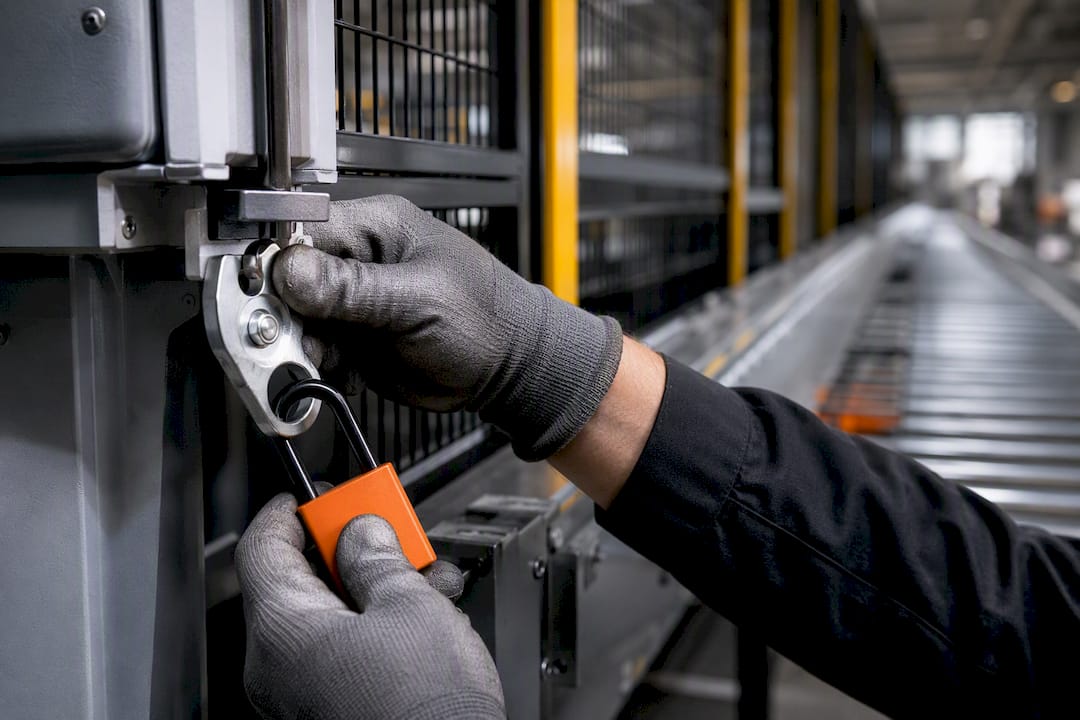
Conveyors and automation. Pinch points and lockout/tagout gaps around automated sortation systems deserve their own talk, separate from general machine guarding.
Hazardous materials and chemical handling. Labeling, SDS access, and spill response tie directly to OSHA’s hazard communication standard. Ask staff to locate the nearest SDS binder without being told where it is.
Fire and emergency response, seasonal hazards, and driver safety round out the rotation. These include heat stress in summer, ice on dock ramps in winter, and distracted-driving prompts for anyone behind the wheel.
What Meeting Type Fits Your Operation?
Toolbox talks, sometimes called tailgate talks, are short and topic-specific, typically 5 to 20 minutes with 10 to 15 minutes as the practical sweet spot. Pre-task briefings are even shorter, run right before a specific job starts, and focus on that job’s unique risks. Formal safety meetings run broader, usually 15 to 30 minutes, and cover policy, trend data, and cross-department issues.
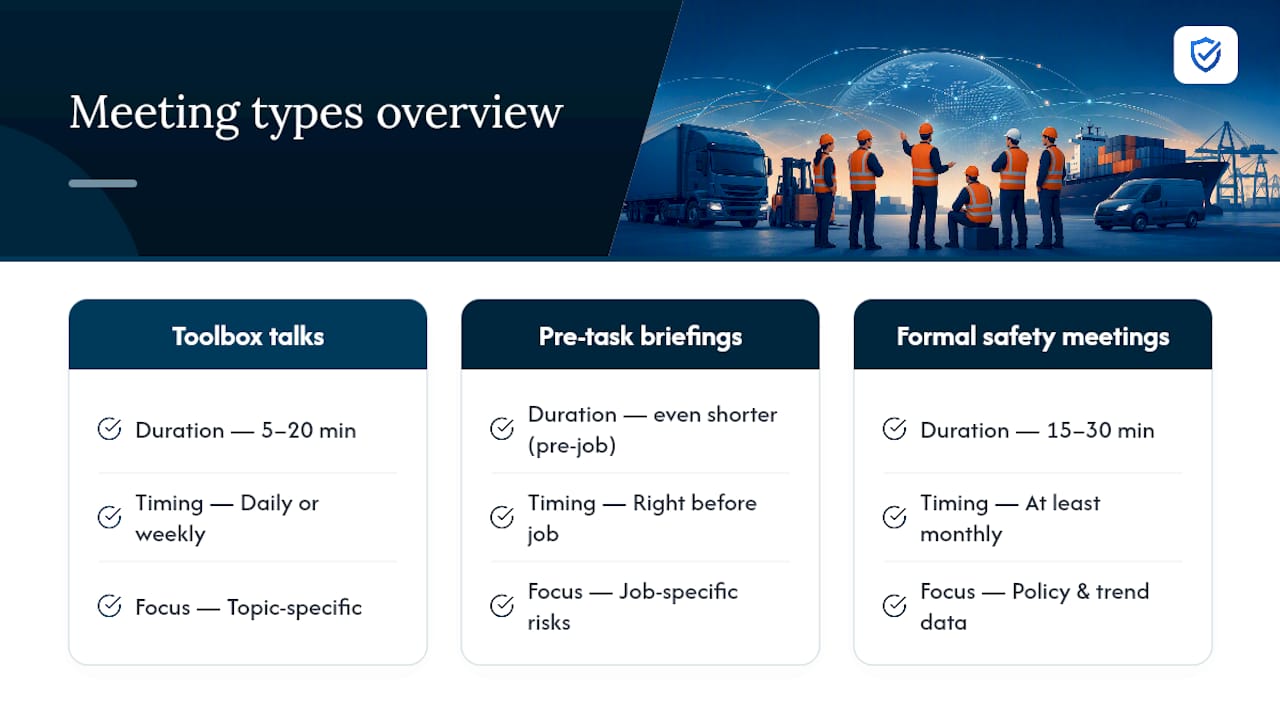
Meeting frequency should match site activity. Busier warehouses and trucking operations may hold toolbox talks daily or weekly; slower operations might maintain weekly or biweekly sessions. Formal meetings should occur at least once a month. Some state OSHA plans set their own cadence requirements, so check jurisdictional rules before locking in a schedule.
When a near-miss or incident happens, don’t wait for the next scheduled talk. Holding an unscheduled debrief within 24 hours captures details while memory is fresh and signals to your team, and to auditors, that you take incidents seriously.
How Do You Make Safety Meetings Actually Land?
A meeting that feels like a lecture gets tolerated, not absorbed. Effective safety meetings work as conversations, not monologues. Here’s a sequence that consistently produces better engagement than reading a script off a clipboard:
- Open with a specific hazard or near-miss, ideally one from your own site in the past week, not a generic industry example.
- Ask open-ended questions and use names. “Maria, if that pallet had shifted on you, what would you have done?” beats “Does everyone understand the risk?”
- Bring a prop or run a two-minute demo. Holding a damaged strap or walking to the actual hazard location makes the point stick.
- Rotate presenters. Let an experienced forklift operator run the PIT talk instead of always hearing from the same supervisor.
- Keep it single-message. One clear takeaway beats five diluted ones.
- Assign a measurable action item with an owner and a deadline, then open next meeting by reviewing whether it got done.
Pro Tip: If attendance feels passive, stop asking “any questions?” at the end. Ask one specific worker to summarize the single takeaway in their own words before you close the meeting.
What Should Your Meeting Records Actually Include?
Auditors and insurers want to see that training happened, who received it, and what got done afterward. A defensible meeting record includes:
- Date and time of the meeting
- Topic covered and facilitator name
- Full list of attendees with printed name and signature
- Key points discussed, in a sentence or two
- Any assigned action items, with an owner and due date
General training records typically warrant a retention window of around three years, while exposure, medical, or chemical-related records often need to be kept longer. Paper sign-in sheets work but get lost, smudged, or left in a truck cab. Timestamped digital attendance removes that risk and cuts the time supervisors spend chasing down signatures after the fact. For a deeper breakdown of retention windows and formats, see this guide to digital recordkeeping for safety meetings, and for broader documentation workflows, this piece on construction document control applies the same logic to logistics sites.
A Ready-to-Run 5 to 15 Minute Toolbox Talk Template
Use this flow for any topic in your rotation:
- Open with a one-sentence hazard statement tied to your site.
- Cover three talking points, no more.
- Run one quick demo or ask one open-ended question.
- Recap three takeaways.
- Collect signatures on the sign-in sheet.
- Assign one action item before people disperse.
Sample intro for forklift blind spots: “Last week a forklift and a picker nearly collided at the aisle 4 intersection because neither could see the other coming. Today we’re talking about where your blind spots actually are.” Sample intro for trailer creep: “A trailer that isn’t chocked can shift up to a few inches once loading starts, and that gap is enough to catch a foot.” Pull a printable checklist and sign-in format from this 5 to 15 minute OSHA ready checklist, and follow up within 24 hours on whatever action item you assigned.
Where Most Safety Meeting Programs Quietly Fail
The same three mistakes surface repeatedly: lecturing instead of asking, never closing the loop on action items, and running topics disconnected from what’s actually happening on the floor that week. Each one erodes trust and quietly kills incident reporting. Two fixes work fast: make next week’s talk site-specific, and pick one open action item and actually close it before the next meeting starts.
“Fast-paced warehouse and logistics operations cannot afford administrative friction. MySafetySolution streamlines shift-change safety briefings into quick, five-minute sessions with zero paperwork and instant compliance logging.”
— Matthew Hoffman, President - MySafetySolution
Cut the Administrative Drag Out of Your Safety Program
My Safety Solution is designed for the gap between running a good meeting and proving you ran it. Instead of chasing paper sign-in sheets or rebuilding topic lists from scratch every week, you schedule meetings from a library of 2,500+ talks, with schedules ranked by real OSHA injury and citation data for your trade and state, and track attendance with timestamped digital signatures. That combination addresses two problems this article just walked through: talks that go stale because nobody has time to write fresh content, and records that go missing before an audit. Warehouse and distribution operations can see how the scheduling and attendance features work on the safety meeting software for warehousing page, or go straight to the My Safety Solution homepage and start your 15-day free trial to see your first meeting record generated before your next shift change.
Where to Verify the Standards Behind This Guide
Primary sources referenced throughout include OSHA’s powered industrial trucks standard (29 CFR 1910.178), the hazard communication standard (1910.1200), and NIOSH for ergonomics and environmental hazard guidance. Driver-specific rules fall under the FMCSA. Trenching and excavation crews working alongside logistics operations can also reference this trenching safety requirements guide for adjacent compliance detail.