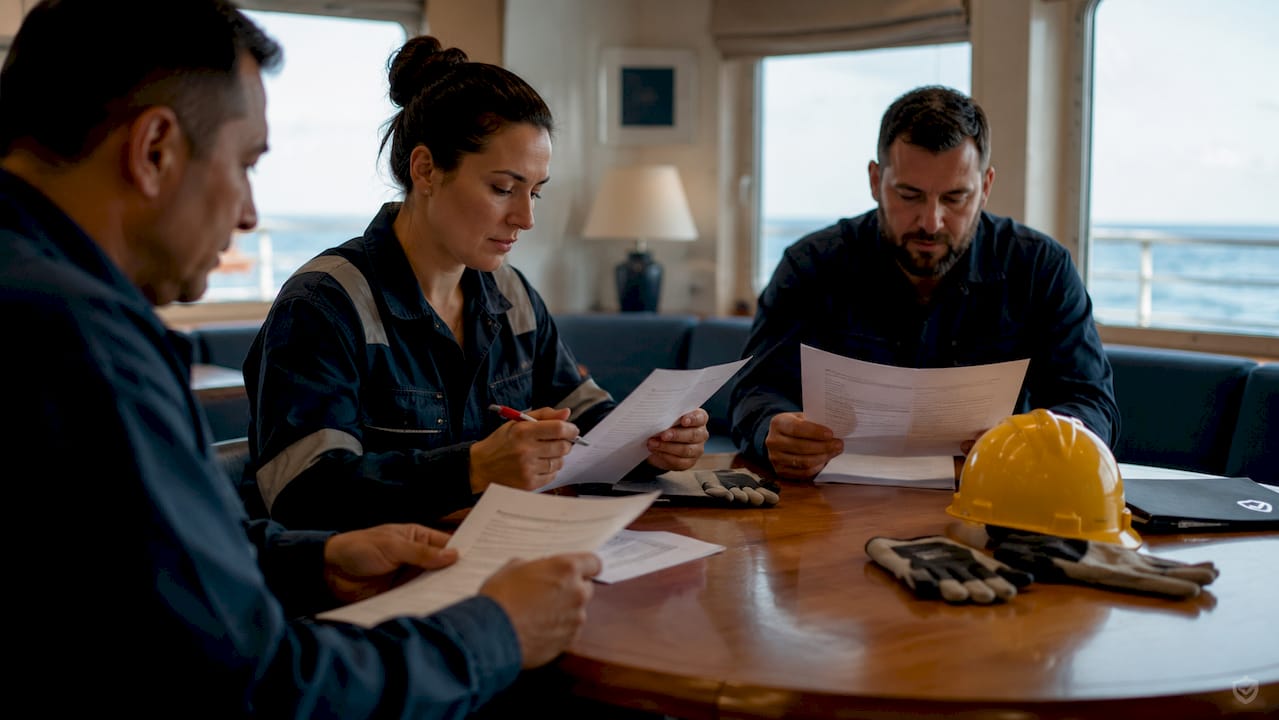
Crew safety is the systematic approach to protecting workers by minimizing risks during everyday operations through proven practices and compliance with safety regulations. Most safety officers focus on emergency response, but most injuries occur during routine tasks on the main deck and in the engine room. That finding, drawn from a review of approximately 3,000 P&I crew claims, reframes where your attention belongs. Regulations like the Maritime Labour Convention (MLC) and the Code of Safe Working Practices (COSWP) set the compliance floor. Getting above that floor requires culture, leadership, and the right tools working together.
1. What are the top best practices for crew safety in daily operations?
Strong workplace safety for crew starts with treating routine work as the highest-risk category, not a background activity. The data supports this: experienced crew sustain injuries during familiar tasks as often as less experienced crew do. Complacency in routine jobs is a hidden risk that no amount of emergency drill preparation addresses on its own.
The best practices for crew safety in daily operations include:
- Build a no-blame reporting culture. Open hazard reporting only works when crew trust that speaking up will not cost them. Establish a written policy that separates reporting from discipline.
- Run realistic safety drills. The 2026 COSWP amendments now require emergency drill scenarios to account for the possible presence of shoreside staff or third parties. Generic drills no longer meet the standard.
- Tailor risk assessments to specific tasks. A generic template applied to every job is a compliance checkbox, not a safety tool. Write assessments for the actual conditions of each task.
- Maintain equipment and PPE without exception. Deferred maintenance and missing PPE are leading contributors to routine-task injuries. Assign ownership and set inspection schedules.
- Model psychological safety from the top. Leaders who respond to errors with curiosity rather than blame create the conditions for early hazard detection.
- Enforce rest and work hour limits. Fatigue is a systemic contributor to incidents, not a personal failing. Treat rest compliance as a non-negotiable operational requirement.
Pro Tip: Review your last five incident reports and identify whether each injury occurred during routine work or an emergency. If four or more were routine, your risk assessment process needs a full revision.
2. How can fatigue and workload management improve crew safety?
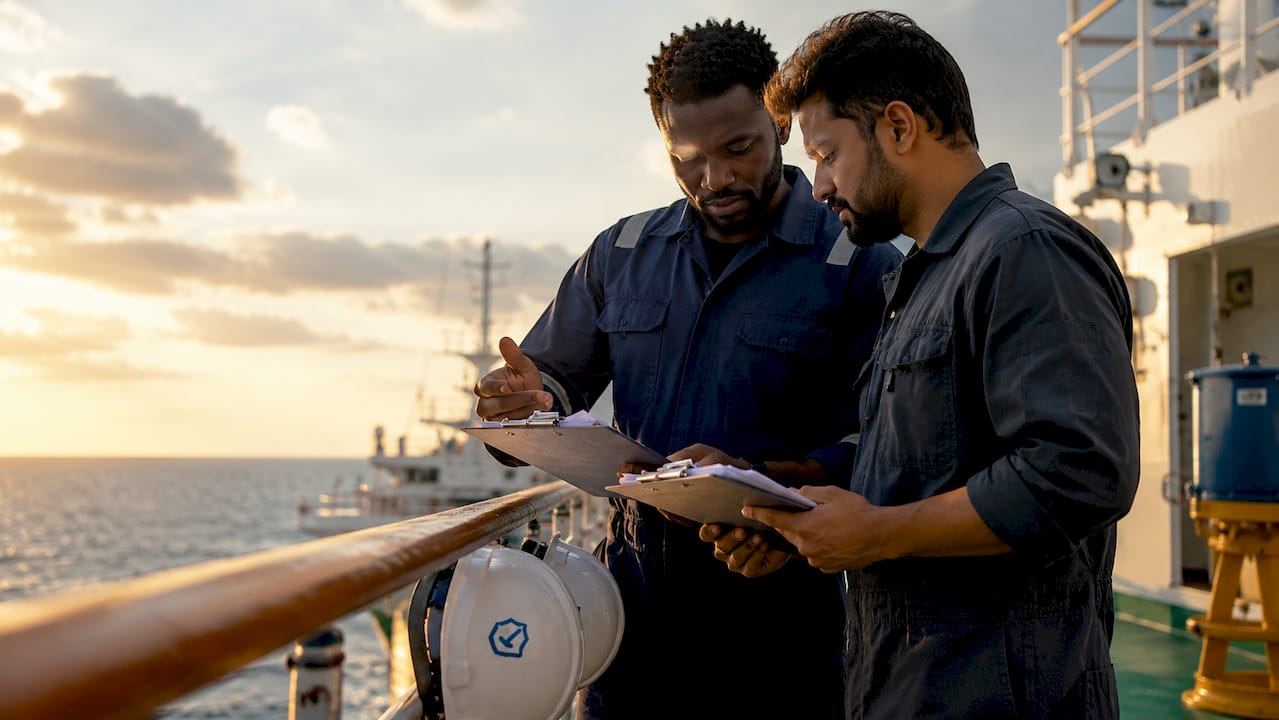
Fatigue is not a soft issue. Safety failures often reflect human limitations like fatigue and stress more than deliberate error. That distinction matters because it shifts the corrective action from individual discipline to systemic workload management.
The regulatory baseline is clear. Crew must receive minimum rest of 10 hours per 24-hour period and 77 hours per 7-day period. Maximum work limits sit at 14 hours per 24-hour period and 72 hours per 7-day period. Port State Control inspectors audit these records directly, and deficiencies cause detentions.
Practical workload management strategies include:
- Watch rotation planning. Design rotations that protect minimum rest periods even during port calls and cargo operations.
- Shift handover protocols. Structured handovers reduce the cognitive load on incoming crew and prevent task gaps.
- Fatigue monitoring records. Maintain accurate work and rest hour logs. Gaps or inconsistencies are the first thing inspectors flag.
- Staff feedback loops. Ask crew directly about workload pressure. Self-reported fatigue is an early warning signal that formal records often miss.
- Leadership recognition of fatigue signs. Train supervisors to identify behavioral indicators of fatigue, including slowed response, irritability, and missed steps.
Pro Tip: Schedule a monthly review of work-rest hour records before your Port State Control inspection window opens. Catching a pattern of non-compliance internally is far less costly than a detention.
3. Why psychological safety is the foundation of crew safety culture
Psychological safety is the belief that a person can speak up, report a near-miss, or question a procedure without fear of punishment or embarrassment. Psychological safety enables crew to surface risks before they become incidents. Without it, hazard visibility drops and accidents accumulate silently.
Several barriers block psychological safety in crew environments:
- Hierarchy. Rank-based cultures suppress upward communication. Junior crew rarely challenge senior officers even when they see a clear risk.
- Cultural differences. Multinational crews bring different norms around authority and disagreement. A safety culture must account for this variation explicitly.
- Fatigue. Tired crew disengage from reporting. Fatigue and psychological safety are connected problems, not separate ones.
- Fear of blame. When past incidents led to discipline rather than investigation, crew stop reporting near-misses.
“Psychological safety is the top leading indicator for safety performance and must be actively cultivated by leadership through their responses to errors and feedback. A leader who reacts to a near-miss report with curiosity rather than anger sends a signal that shapes every future report.”
Leadership behavior is the single most powerful lever for building or destroying psychological safety. Stop work authority, where any crew member can halt an operation they believe is unsafe, is one of the clearest structural signals that leadership means what it says. Pair it with a written policy that protects the person who calls the stop.
4. What are the key regulatory compliance requirements for crew safety?
Regulatory compliance is not a separate workstream from crew safety management. It is the framework that makes safety measurable and defensible. The Maritime Labour Convention sets the baseline for wages, rest hours, medical certificates, and Seafarer Employment Agreements. Every crew member must have a signed agreement on file before departure.
The 2026 COSWP edition updated Chapters 4 and 15, with new requirements covering enclosed space rescues and lifting operations. These updates are not optional guidance. They reflect current best practice expectations from Port State Control inspectors.
| Compliance Area | Requirement | Inspection Focus |
|---|---|---|
| Rest and work hours | 10 hrs min rest/24h; 77 hrs/7d | Accurate logs, no falsification |
| Seafarer Employment Agreements | Signed before departure | Document presence and currency |
| Medical certificates | Valid and current for all crew | Expiry dates and scope |
| Emergency drills | Scenario-specific, logged | Participation records, realism |
| Risk assessments | Task-specific, not generic | Evidence of tailoring |
Port State Control inspectors look for evidence of active engagement, not just document presence. A drill log that lists dates without scenarios, participant names, or corrective actions will not satisfy an inspector. Tailored risk assessments with job-specific hazards and controls carry far more weight than a standard form with a signature.
Crew also hold a right that many safety officers underutilize. Crew have the right to refuse work they reasonably believe is unsafe, and employers must investigate the refusal without penalizing the individual. Communicating this right openly reinforces the no-blame culture and reduces the risk of crew proceeding with unsafe tasks under pressure.
5. Which tools and technologies support crew safety management?
Technology does not replace safety culture, but it makes safety culture visible and measurable. The right tools give safety officers an audit trail, reduce administrative friction, and surface early warning signals that manual processes miss.
Safety management tools generally fall into three categories:
- Digital record-keeping platforms. These replace paper logs for work-rest hours, drill records, and incident reports. They reduce transcription errors and make audit preparation faster.
- Hazard reporting apps. Mobile-enabled apps lower the barrier for crew to submit near-miss reports. Higher submission rates reflect better psychological safety, not more incidents.
- Training management systems. These track certification expiry dates, schedule refresher training, and generate compliance reports automatically.
| Tool Category | Best Suited For | Key Limitation |
|---|---|---|
| Entry-level field apps | Small crews, single-vessel operations | Limited reporting depth, manual follow-up |
| Mid-tier digital platforms | Multi-vessel operators, moderate complexity | Requires consistent crew adoption |
| Enterprise safety platforms | Large fleets, complex regulatory environments | Higher cost, longer implementation time |
Adoption is the most common failure point. A tool that crew do not use generates no data and no safety value. Leadership must model the behavior by using the same reporting channels they ask crew to use. Managing safety in the workplace effectively requires consistent engagement from every level of the organization, not just the safety officer.
Pro Tip: Before selecting a platform, run a 30-day pilot with one vessel or crew group. Measure submission rates for near-miss reports before and after. Adoption data is more reliable than vendor claims.
My Safety Solution is built specifically for high-risk, deskless workforces. Its AI-powered content generation creates tailored safety meeting topics, and its mobile-enabled platform supports attendance tracking and digital record-keeping without adding administrative burden to safety officers. Companies using the platform report reduced incident rates and improved compliance records.
Key takeaways
Crew safety requires addressing routine operational risks first, because that is where the majority of injuries occur, not during emergencies.
| Point | Details |
|---|---|
| Routine tasks are the highest risk | Most injuries happen during everyday operations, not emergencies, so risk assessments must reflect that reality. |
| Fatigue is a systemic issue | Enforce MLC rest limits and monitor work-hour records consistently to prevent fatigue-related incidents. |
| Psychological safety drives reporting | Leaders who respond to near-misses with curiosity rather than blame get more reports and earlier hazard detection. |
| Compliance requires active evidence | Port State Control inspectors expect tailored risk assessments and detailed drill logs, not just signed forms. |
| Technology supports but does not replace culture | Digital tools increase audit-trail visibility, but crew adoption depends on leadership modeling the behavior. |
What I’ve learned about crew safety that most guides get wrong
After years of working with safety officers across high-risk industries, the pattern I see most often is this: organizations invest heavily in emergency preparedness and almost nothing in routine-task risk management. The Gard data makes the cost of that imbalance concrete. Experienced crew get hurt doing familiar jobs because familiarity breeds inattention, and inattention is not a character flaw. It is a predictable human response to repetition.
The second thing most guides miss is the relationship between fatigue and psychological safety. They are treated as separate problems with separate solutions. They are not. A fatigued crew member is less likely to speak up, less likely to file a near-miss report, and more likely to proceed with a task they know feels wrong. Fixing one without fixing the other produces incomplete results.
The KPI shift I recommend to every safety leader I work with is moving from lagging indicators like total recordable incident rates to leading indicators like near-miss submission rates and drill participation quality. Near-miss reporting rates tell you whether your safety culture is working before an injury confirms that it is not. That is the only metric that gives you time to act.
The most underused tool in crew safety is the daily conversation. Not the formal safety meeting, not the drill debrief, but the five-minute check-in where a supervisor asks a crew member what felt off today. That conversation, done consistently, is worth more than any software platform or compliance checklist.
“Real crew safety begins with daily, active engagement, not passive lectures. We created MySafetySolution to turn mandatory safety briefings into meaningful discussions backed by seamless, tamper-proof documentation.”
— Matthew Hoffman, President - MySafetySolution
How My Safety Solution supports your crew safety program
Safety officers managing compliance across high-risk crews carry a significant documentation burden. Meeting records, attendance logs, training certifications, and drill reports all require consistent upkeep to survive a Port State Control inspection or an OSHA audit.
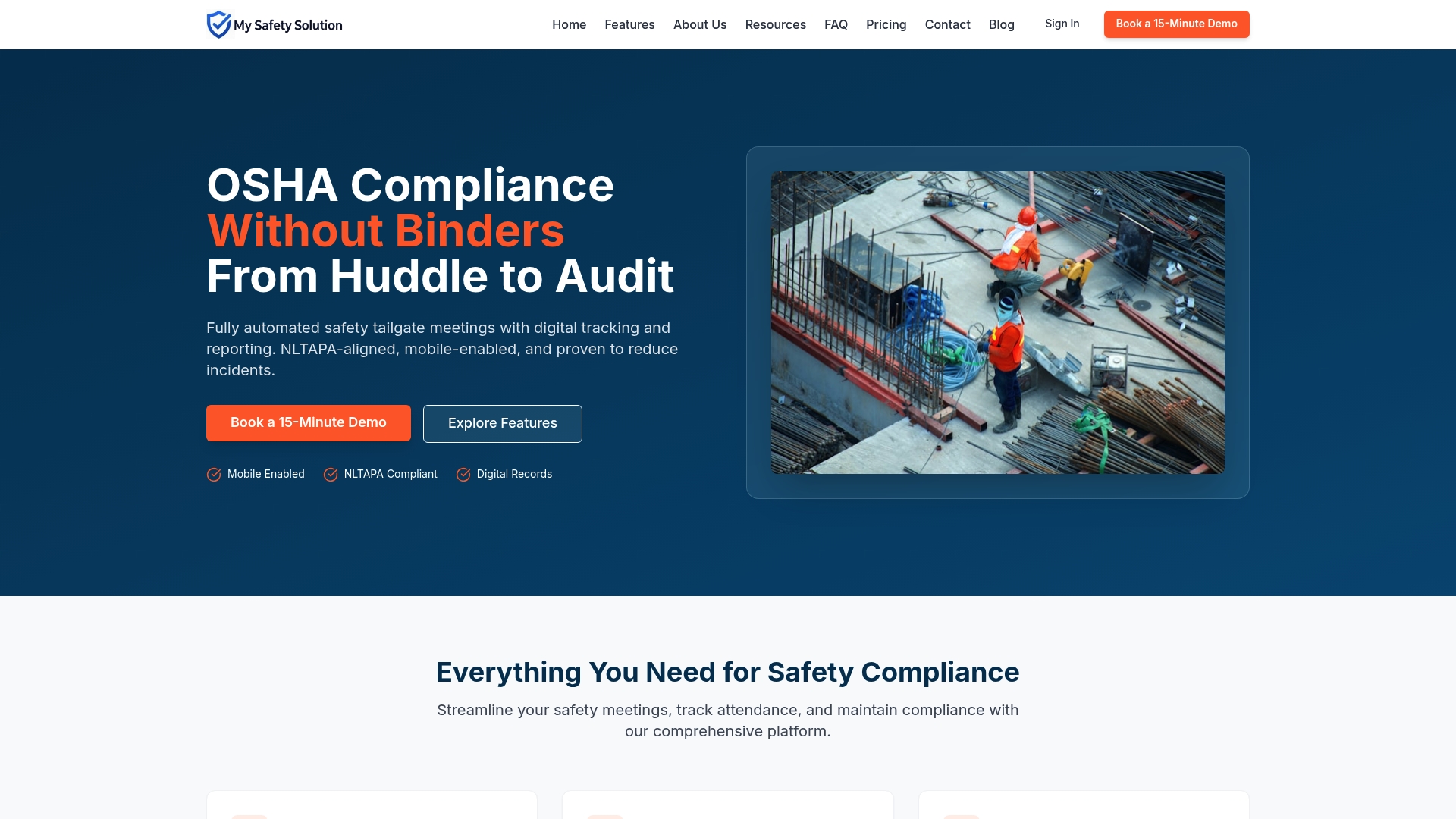
My Safety Solution removes that administrative load with fully automated safety meeting management built for deskless workforces. The platform generates AI-powered, tailored safety topics for each meeting, tracks attendance digitally, and maintains a complete audit trail without manual data entry. Safety officers can focus on proactive risk management rather than paperwork. For teams in construction, utilities, or transportation, My Safety Solution’s OSHA compliance software integrates directly into existing workflows and scales with crew size and operational complexity.
FAQ
What is crew safety and why does it matter?
Crew safety is the proactive management of hazards that workers face during daily operations in high-risk environments. Most injuries occur during routine tasks, not emergencies, making everyday risk management the highest priority.
What are the MLC rest hour requirements for crew?
The Maritime Labour Convention requires a minimum of 10 hours of rest per 24-hour period and 77 hours per 7-day period. Maximum work limits are 14 hours per 24-hour period and 72 hours per 7-day period.
How does psychological safety improve crew safety outcomes?
Psychological safety encourages crew to report near-misses and hazards without fear of blame. Higher reporting rates give safety officers earlier warning of risks before they result in injuries.
What do Port State Control inspectors look for during crew safety inspections?
Inspectors look for evidence of active engagement, including detailed drill participation logs, task-specific risk assessments, and accurate work-rest hour records. Document presence alone does not satisfy inspection requirements.
How can safety officers improve crew safety training effectiveness?
Tailor training scenarios to actual operational conditions and update them when regulations change, as the 2026 COSWP amendments require. Track participation and corrective actions in writing to demonstrate meaningful engagement.