
Safety culture training is defined as a structured program that builds the attitudes, behaviors, and systems employees and leaders need to prevent workplace injuries before they happen. Organizations with formal safety and health programs reduce injury rates by 20–40%. That number represents thousands of workers who go home without a serious injury each year. The U.S. Department of Labor reinforces this priority with nearly $13 million in Susan Harwood Training Grants available in 2026 to fund workplace safety education. For safety professionals and organizational leaders, the question is no longer whether to invest in safety culture training. The question is how to build a program that actually sticks.
Safety culture training differs from standard safety compliance training. Compliance training teaches workers what the rules are. Culture training changes how workers think and act when no one is watching. The industry term for this broader effort is “safety management,” and it encompasses leadership accountability, hazard recognition, and continuous improvement alongside the regulatory requirements most teams already track.
What are the essential components of safety culture training?
Effective safety culture training does not start with a training module. It starts with organizational readiness. Leadership commitment is the single most critical prerequisite. Without visible support from supervisors and executives, training programs lose credibility before the first session ends.
The foundational elements every organization needs before launching a program include:
- Clear safety policies documented and accessible to all workers
- Defined accountability structures that assign responsibility to specific roles
- Training infrastructure that supports both in-person and digital delivery
- Language and literacy considerations for multilingual or deskless workforces
- OSHA-compliant documentation systems that create a verifiable audit trail
| Requirement | Basic Setup | Advanced Setup |
|---|---|---|
| Safety policies | Written procedures posted on-site | Digital, searchable, version-controlled |
| Training delivery | Classroom or paper-based | Mobile-enabled, AI-generated content |
| Attendance tracking | Sign-in sheets | Automated digital records |
| Behavior monitoring | Supervisor observation | Behavior checklists and maturity models |
| Compliance documentation | Manual filing | Real-time audit trail with timestamps |
Advanced setups close the gap between what gets trained and what gets documented. My Safety Solution, for example, automates attendance tracking and generates digital records that satisfy OSHA documentation standards without adding administrative burden to safety managers.
Pro Tip: Before launching any workplace safety program, audit your current documentation process. If you cannot produce a complete attendance record from last quarter’s safety meetings within 10 minutes, your infrastructure needs work before your training content does.
How do you design interactive safety culture training?
The most effective safety training programs use interactive methods including case studies, role-plays, and peer intervention scenarios. Passive lecture formats produce low retention and minimal behavior change. Workers learn safety behaviors by practicing them, not by watching slides.
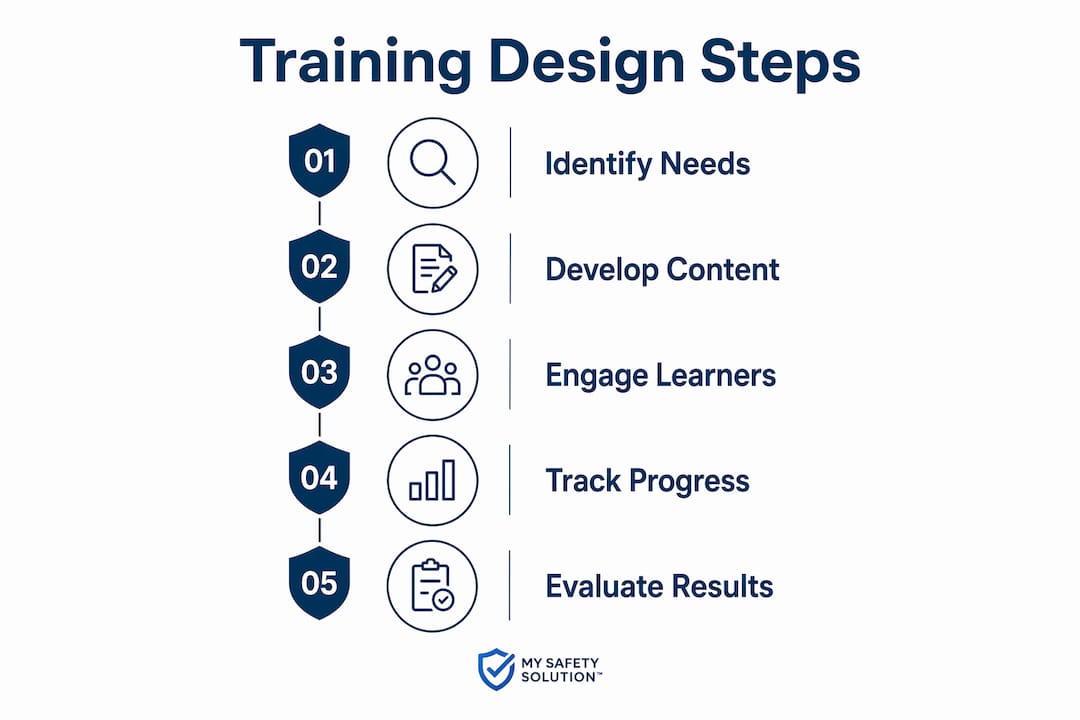
A proven six-step framework for designing effective sessions follows this sequence:
- Hazard identification — workers identify real risks in their specific work environment
- Hierarchy of controls — teams apply elimination, substitution, and engineering controls before relying on PPE
- Policy alignment — training content connects directly to documented safety policies
- Continuous training cycles — sessions repeat and build on prior knowledge rather than treating each meeting as standalone
- Visual communication — safety metrics and reminders stay visible in the work environment
- Audits and corrective actions — regular inspections verify that trained behaviors are being applied
This six-step framework creates measurable accountability at every stage. Each step generates a record that safety managers can review and act on.
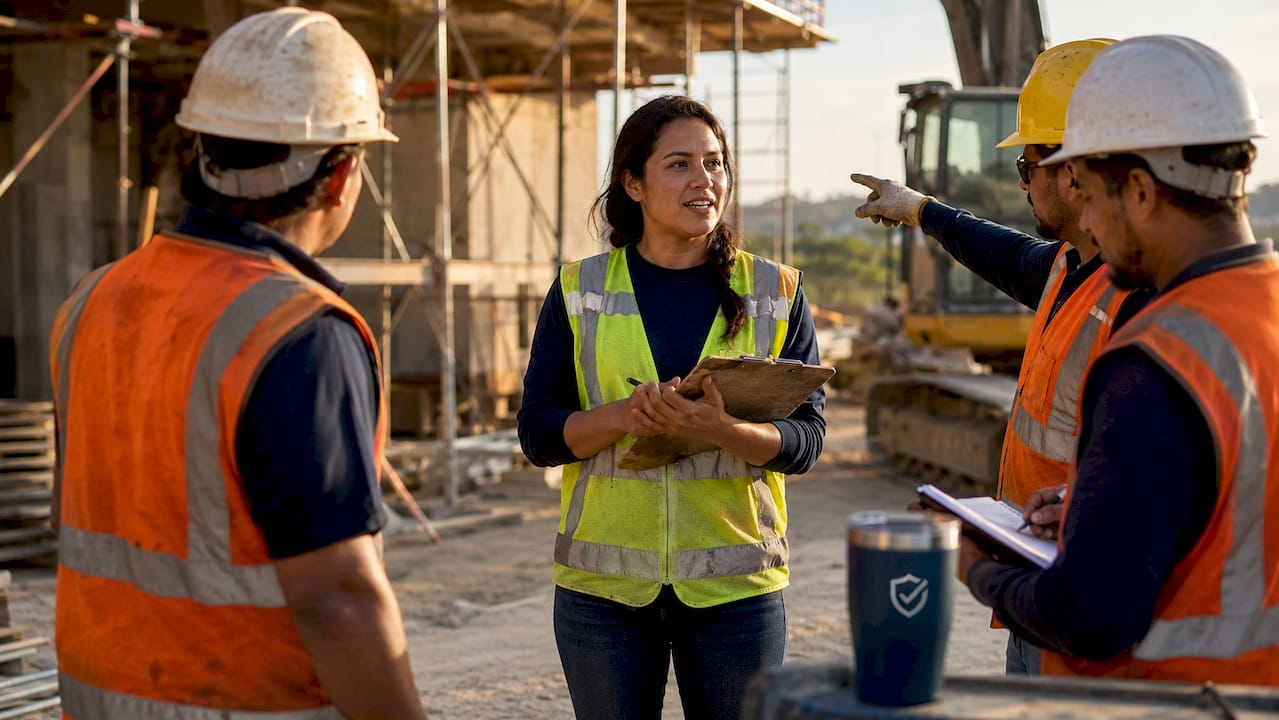
Microlearning modules work particularly well for deskless workforces. A 10-minute tailgate meeting focused on one specific hazard produces better retention than a two-hour annual training event. Scenario-based activities, where workers role-play a peer intervention or walk through a near-miss investigation, build the muscle memory that transfers to real situations.
Pro Tip: Design each training session around one specific scenario your team has actually encountered. Generic examples create generic responses. Real scenarios create real behavior change.
The shift from compliance enforcement to people-centered leadership is the defining characteristic of modern safety management training. Leaders who model safe behavior, ask questions, and acknowledge near-misses without blame create the psychological safety workers need to report hazards honestly.
Common design mistakes to avoid:
- Treating training as a one-time annual event rather than an ongoing process
- Using the same content for every role regardless of actual hazard exposure
- Skipping feedback loops that tell you whether workers understood the material
- Ignoring language barriers that prevent full participation from non-English-speaking workers
How can you measure the success of your safety program?
Measurement separates programs that improve safety from programs that only document it. Visible safety metrics, tracked consistently, give leaders the data they need to make real decisions. The most useful key performance indicators include incident rates, near-miss reports, training completion rates, and corrective action closure times.
Effective measurement tools include:
- Incident rate tracking compared against pre-program baselines
- Leadership behavior checklists that verify supervisors are modeling trained behaviors
- Employee engagement surveys that capture perception of safety culture, not just compliance
- Audit completion rates that confirm inspections are happening on schedule
- Training completion records with timestamps and attendance verification
| Measurement Approach | What It Captures | Outcome |
|---|---|---|
| Incident rate comparison | Injury frequency before and after training | Quantifies program ROI |
| Leadership checklists | Supervisor behavior in the field | Identifies accountability gaps |
| Engagement surveys | Worker perception of safety culture | Reveals culture maturity level |
| Audit records | Inspection frequency and findings | Confirms corrective action follow-through |
Culture maturity models add a qualitative dimension that incident rates alone cannot capture. These models assess where an organization sits on a spectrum from reactive to proactive to interdependent safety culture. Teams that track their maturity level over time can see whether training is shifting attitudes, not just behaviors.
You can find current OSHA safety statistics to benchmark your organization’s incident rates against industry averages. That comparison gives you an honest starting point and a realistic improvement target.
What are the biggest challenges in sustaining safety culture training?
The most common failure point in workplace safety programs is treating training as an event rather than a system. A single workshop, no matter how well designed, does not change culture. Culture changes when safe behavior gets reinforced daily through leadership actions, visible metrics, and consistent accountability.
Safety fatigue sets in when training content becomes repetitive and disconnected from workers’ actual experiences. Embedding behavior checklists and culture maturity models into daily operations prevents this. Workers stay engaged when they see that training connects to real hazards they face, not generic scenarios from a stock curriculum.
“Safety culture training must be treated as an ongoing process, not a calendar event. Organizations that embed safety behaviors into daily routines through checklists, visible metrics, and leadership reinforcement sustain their gains. Those that rely on annual training cycles watch their progress erode within months.”
Best practices for sustaining long-term program benefits include:
- Schedule refresher sessions quarterly, not annually
- Rotate training topics to reflect current hazard data from recent inspections
- Recognize workers who demonstrate safe behavior publicly and specifically
- Keep safety metrics visible in break rooms, on job sites, and in digital dashboards
- Involve frontline workers in developing training content for their own roles
A 12-month pilot program in New South Wales trained 1,000 agricultural workers to improve safety knowledge and issued certificates of completion to verify competency. The certificate structure created accountability and gave workers a tangible record of their progress. That model translates directly to construction, manufacturing, and utilities environments where competency verification matters for both compliance and liability.
Pro Tip: Build a 12-month training calendar at the start of each year. Assign specific topics to specific months based on seasonal hazards and past incident data. A calendar makes training predictable for workers and accountable for leaders.
Learning how to manage safety as an ongoing operational function, rather than a compliance checkbox, is the mindset shift that separates organizations with declining injury rates from those stuck in reactive cycles.
Key Takeaways
Effective safety culture training requires leadership commitment, interactive delivery, consistent measurement, and daily reinforcement to produce lasting reductions in workplace injuries.
| Point | Details |
|---|---|
| Leadership drives outcomes | Safety culture programs fail without visible, accountable leadership at every level. |
| Interactive methods improve retention | Case studies, role-plays, and scenario-based activities outperform passive lecture formats. |
| Measurement requires multiple tools | Combine incident rates, engagement surveys, and leadership checklists for a complete picture. |
| Ongoing reinforcement prevents fatigue | Quarterly refreshers and daily behavior checklists sustain culture gains over time. |
| Documentation protects compliance | Automated attendance records and audit trails satisfy OSHA standards and reduce liability. |
The compliance trap most safety leaders fall into
After working closely with safety professionals across construction, manufacturing, and utilities, I’ve noticed a pattern that rarely gets discussed openly. Most organizations invest in safety training after an incident, not before one. The training gets designed to satisfy a regulator or close a corrective action, and it shows. Workers can tell when a program exists to protect the company rather than protect them.
The shift that actually moves the needle is when leadership stops treating training as a legal obligation and starts treating it as a leadership function. That means supervisors who ask workers about hazards before starting a task, not just after an incident. It means near-miss reporting that gets praised, not investigated for blame. It means training content that reflects what workers actually encountered last week, not what a curriculum designer wrote two years ago.
The organizations I’ve seen sustain real injury reductions share one trait: their safety managers have time to focus on proactive risk management because their administrative systems handle documentation automatically. When a safety manager spends three hours every week chasing paper sign-in sheets, that’s three hours not spent in the field identifying hazards. The administrative burden is not a minor inconvenience. It is a direct threat to program quality.
The Susan Harwood Training Grants exist precisely because the federal government recognizes that small and mid-sized organizations cannot always fund this infrastructure alone. If your organization has not applied for that funding, the 2026 cycle is open. That money can pay for training development, delivery, and the technology that makes programs sustainable.
“Safety culture isn't built through annual seminars; it's reinforced through daily operational habits. MySafetySolution helps leadership weave daily safety discussions into field culture with minimal friction and maximum consistency.”
— Matthew Hoffman, President - MySafetySolution
How My Safety Solution supports safety culture programs
Safety professionals who build strong training programs still face one persistent problem: keeping documentation complete, accurate, and audit-ready without consuming the time they need for actual safety work.
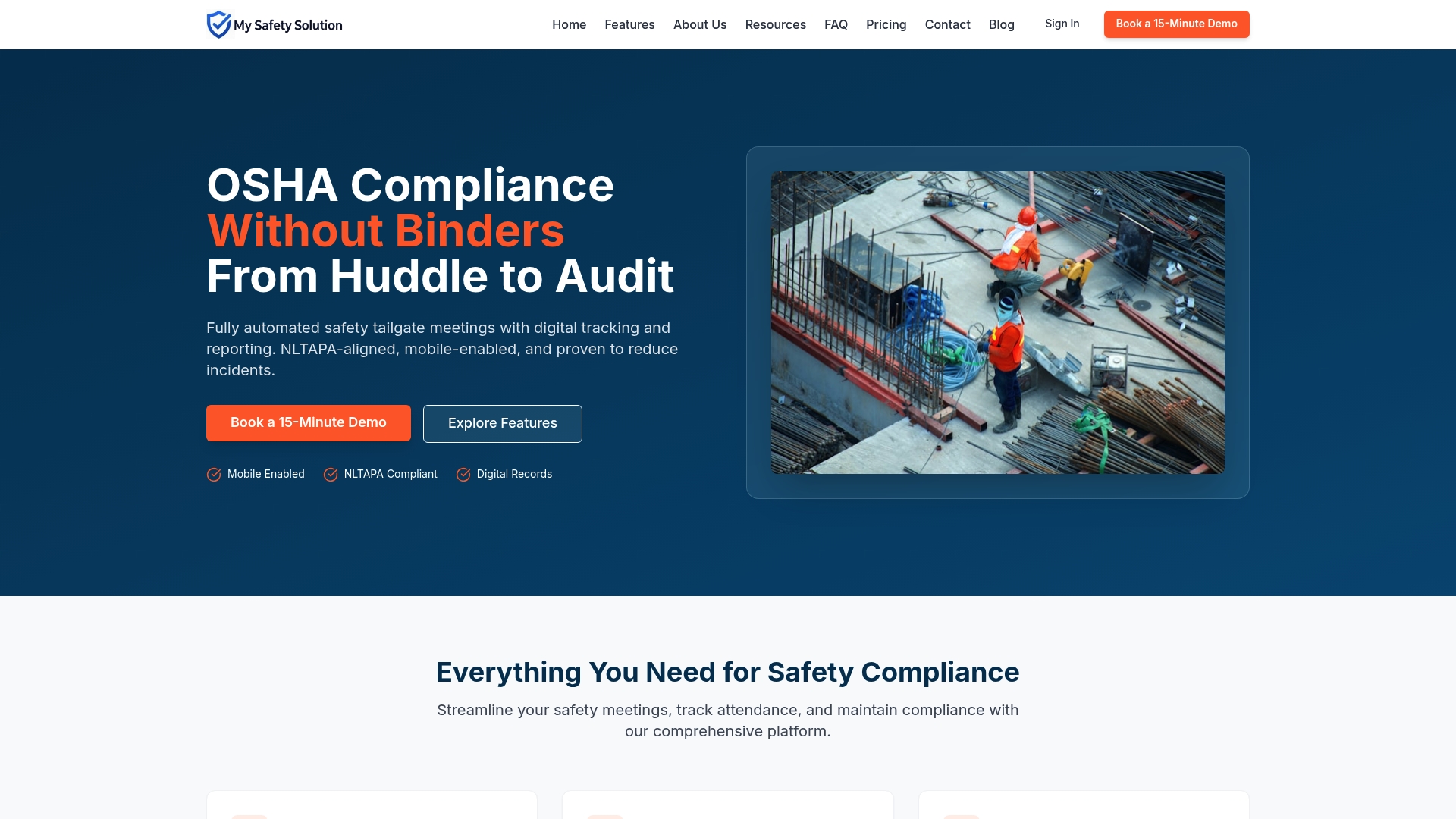
My Safety Solution addresses that problem directly. The platform automates safety meeting management for high-risk, deskless workforces in construction, manufacturing, trucking, and utilities. AI-powered content generation produces tailored safety topics for each session, attendance tracking happens digitally in real time, and every meeting generates a complete audit trail that satisfies OSHA documentation standards. Safety managers who use My Safety Solution report reduced incident rates and improved compliance records. If your team is ready to move from patchwork documentation to a system built for accountability, see what My Safety Solution does and how it fits your operation.
FAQ
What is safety culture training?
Safety culture training is a structured program that builds the attitudes, behaviors, and systems needed to prevent workplace injuries proactively. It goes beyond compliance rules to change how workers and leaders think and act around risk.
How much can safety training reduce workplace injuries?
Organizations with formal safety and health programs reduce injury and incident rates by 20–40%. That reduction reflects the combined impact of leadership accountability, hazard prevention, and continuous training cycles.
What makes safety culture training different from compliance training?
Compliance training teaches workers what the rules are. Safety culture training changes how workers behave when no one is watching, by building shared values, peer accountability, and proactive hazard recognition.
How often should safety culture training sessions be held?
Quarterly refresher sessions outperform annual training events for sustaining behavior change. Microlearning formats, such as short tailgate meetings focused on one specific hazard, produce better retention than infrequent full-day sessions.
Are there grants available to fund workplace safety training programs?
The U.S. Department of Labor offers nearly $13 million in Susan Harwood Training Grants in 2026 to support workplace safety and health training focused on hazard prevention and awareness.