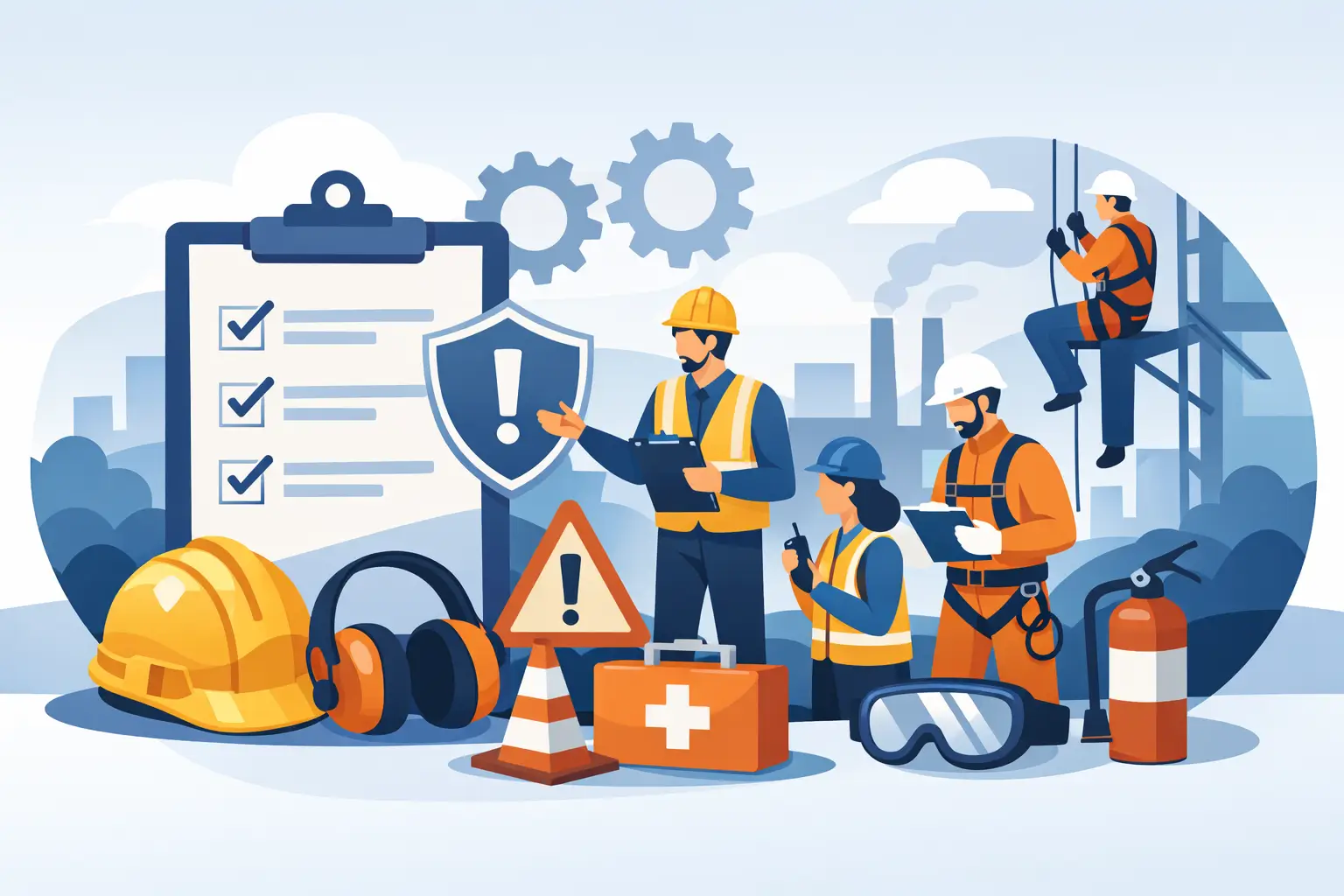
A safety program usually starts breaking down in the same place operations do - when critical work depends on memory, spreadsheets, emails, and disconnected follow-up. That is why many leaders eventually ask, what is occupational safety management, and how is it different from simply having rules, training, and incident forms in place?
Occupational safety management is the structured process of identifying workplace hazards, controlling risk, assigning accountability, documenting compliance activity, and continuously improving how safety is managed across an organization. It is not a single policy or one-time compliance effort. It is an operating system for workplace safety.
For companies with multiple sites, field teams, regulated workflows, or recurring inspection requirements, that distinction matters. A workplace can have written procedures and still lack management control. Safety management is what turns isolated activities into a consistent, measurable function.
What is occupational safety management in practice?
In practice, occupational safety management is the framework a business uses to plan, execute, track, and improve safety responsibilities. It brings structure to the work behind compliance and risk reduction.
That includes common functions such as hazard identification, incident reporting, corrective action tracking, training management, inspections, document control, and policy enforcement. Just as important, it defines who is responsible, what must be completed, when it must happen, and how leadership verifies that the work is actually done.
This is where many organizations run into problems. They may have safety procedures on paper, but the day-to-day system is weak. Inspections are inconsistent. Training records are incomplete. Corrective actions remain open. Incident data sits in separate files with no clear trend analysis. In those cases, the issue is not always a lack of safety intent. It is a lack of safety management.
Why it matters beyond compliance
Some businesses first focus on safety management because of OSHA exposure, customer requirements, insurance pressure, or audit readiness. Those are valid drivers, but occupational safety management has broader operational value.
When safety is managed well, leaders gain better visibility into recurring hazards, overdue actions, and weak points in training or supervision. That improves decision-making. It also reduces the chances that known issues stay unresolved until they result in injury, property damage, downtime, or enforcement action.
There is also a consistency benefit. In organizations with multiple departments, shifts, or job sites, safety performance often varies because processes vary. One site documents near misses carefully while another handles them informally. One supervisor closes inspections quickly while another does not. A management system reduces that variation by setting a common standard and making performance visible.
The result is not just a safer workplace. It is stronger control over a business function that directly affects cost, compliance, and operational reliability.
The core parts of occupational safety management
Most safety management systems include the same foundational elements, even if the terminology differs by company or industry.
Risk identification comes first. A company needs a repeatable way to recognize hazards in facilities, equipment, tasks, and work practices. Without that, prevention is mostly reactive.
Risk control comes next. Once hazards are identified, the organization needs procedures for evaluating severity, assigning corrective actions, setting deadlines, and verifying completion. This is where safety often fails if ownership is unclear or follow-up is weak.
Training management is another core component. Employees need the right training for their roles, but businesses also need proof that training happened, that it was current, and that retraining occurs when required. In regulated environments, undocumented training can be almost as problematic as missed training.
Inspections and audits provide ongoing verification. They help confirm whether standards are being followed in the field rather than assumed in policy documents. Incident management adds another layer by capturing what went wrong, what contributed to it, and what actions are required to prevent recurrence.
Finally, reporting and review turn activity into oversight. Leadership should be able to see trends, open actions, recurring incident types, training gaps, and site-level performance without chasing information across departments.
Occupational safety management is a system, not a binder
One of the most common misunderstandings is treating safety management as a documentation exercise. Documentation matters, but paperwork alone does not create control.
A company can have a detailed manual, signed policies, and inspection checklists stored in folders, yet still struggle with missed follow-ups and inconsistent execution. That is because occupational safety management depends on workflow discipline, accountability, and visibility. The system has to function in real operations.
This is also why manual processes become harder to sustain as organizations grow. A single site may be able to manage inspections and training records with spreadsheets for a while. A distributed operation with multiple supervisors, mobile teams, and recurring compliance tasks usually cannot do that efficiently for long.
The challenge is not just volume. It is coordination. When information is fragmented, leaders cannot easily confirm what is complete, what is overdue, or where risk is accumulating.
What a strong safety management approach looks like
A strong approach is practical, repeatable, and easy to verify. Employees know how to report issues. Supervisors know what they are expected to inspect and document. Safety leaders can track corrective actions, monitor training completion, and produce records when needed. Executives can see whether the program is improving or drifting.
That does not mean every company needs the same level of complexity. A smaller operation may need a leaner structure than a national manufacturer or contractor. The right level of formality depends on workforce size, hazard exposure, regulatory demands, and how many sites or teams are involved.
Still, the underlying principles stay the same. Safety work should be assigned clearly, recorded consistently, and reviewed regularly. If a process depends too heavily on individual memory or local habits, it is likely vulnerable.
Common gaps that weaken safety management
Many organizations do not fail because they ignore safety altogether. They struggle because their processes are partially built and difficult to maintain.
One common gap is scattered information. Training records may sit in one system, incidents in another, inspections in email, and corrective actions in a spreadsheet. That makes trend analysis and accountability harder than they should be.
Another issue is delayed follow-up. Hazards are identified, but actions remain open without escalation. Over time, that creates a false sense of control. The issue was documented, but not resolved.
There is also the problem of inconsistent execution across teams. A policy may be company-wide, yet actual practices differ by location or supervisor. That inconsistency creates compliance risk and makes safety performance harder to measure fairly.
Finally, many businesses lack timely reporting. If leaders only review safety data monthly or quarterly, they may miss early signs of recurring problems. Good management requires current visibility, not just historical records.
The role of technology in modern safety management
For many businesses, technology is what turns safety management from an administrative burden into a controlled process. Digital systems help standardize forms, centralize records, automate reminders, track corrective actions, and improve reporting accuracy.
That matters most in organizations with recurring compliance tasks and distributed responsibility. If inspections, training deadlines, incident reviews, and document updates all rely on manual follow-up, the administrative workload grows quickly. So does the risk of missed steps.
A centralized platform can help by creating one source of truth for safety operations. Instead of chasing records across folders and departments, teams can work from shared workflows and real-time status tracking. That improves audit readiness, but more importantly, it improves daily operational control.
For companies that need structure at scale, systems like My Safety Solution fit this need by bringing core safety functions into one managed environment. The value is not just digitizing forms. It is making safety easier to monitor, assign, and enforce across the organization.
How to tell if your organization needs a stronger system
If safety responsibilities are difficult to track, if documentation is spread across multiple tools, or if leaders cannot quickly answer basic questions about open actions, current training status, or incident trends, the management system is probably too loose.
The same is true if site performance varies widely, inspections are completed inconsistently, or compliance preparation becomes a scramble every time records are requested. Those are management signals, not just paperwork issues.
A stronger occupational safety management approach does not eliminate all incidents or compliance pressure. No system can do that. But it does make risk easier to identify, responsibilities easier to enforce, and performance easier to improve.
The most useful way to think about safety management is not as a side function for audits or emergencies. It is a control system for how your organization handles risk every day. When that system is clear, visible, and consistent, safety stops being a collection of disconnected tasks and starts working like an operational discipline.