A missed inspection, an outdated training record, or a hazard report that never reaches the right manager can create more than paperwork problems. In high-risk operations, those gaps become injuries, violations, downtime, and preventable cost. That is why the question what is occupational risk management matters well beyond the safety department.
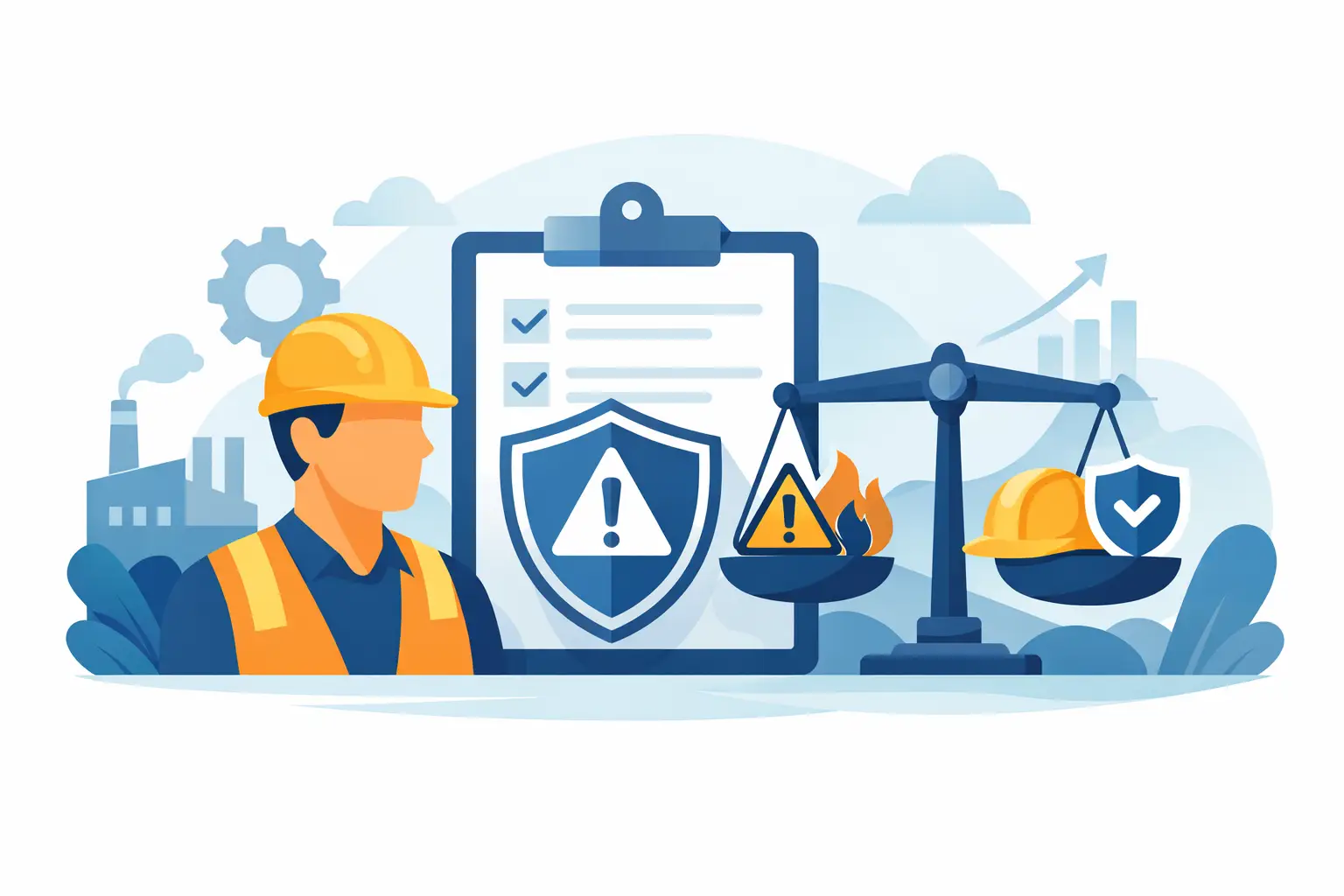
Occupational risk management is the structured process of identifying, assessing, controlling, and monitoring workplace risks that could harm employees, contractors, visitors, or business operations. It gives organizations a repeatable way to reduce the likelihood and severity of incidents while maintaining compliance with safety requirements. In practice, it sits at the center of daily operations, connecting inspections, training, incident reporting, corrective actions, documentation, and accountability.
For companies with multiple sites, changing crews, or regulated work environments, occupational risk management is not a one-time exercise. It is an operating discipline. When it is handled well, leaders have visibility into where risk exists, what controls are in place, who owns follow-up actions, and whether the system is actually working.
What is occupational risk management in practice?
At a basic level, occupational risk management answers four operational questions. What could go wrong? How serious is the exposure? What controls are needed? How will the organization verify those controls remain effective?
That sounds straightforward, but the real challenge is consistency. A company may know how to recognize obvious hazards such as fall exposure, machine guarding failures, chemical handling issues, or forklift traffic conflicts. The harder part is making sure those risks are identified early, evaluated the same way across locations, and tied to documented corrective action.
In practice, occupational risk management includes routine hazard identification, formal risk assessments, job safety analysis, training verification, inspection programs, incident investigation, and ongoing review of control measures. It also includes the management layer around those tasks: assigning responsibility, setting deadlines, maintaining records, and proving due diligence during audits or investigations.
That is why mature organizations treat risk management as a system rather than a collection of disconnected safety activities. If inspections happen in one process, training records live in another, and corrective actions are tracked in email, leaders lose control quickly.
Why occupational risk management matters to operations
Safety professionals already understand the human stakes. For operations leaders and business owners, the business stakes are just as real. Poor risk management creates production disruption, claim costs, regulatory exposure, equipment damage, staffing issues, and reputational risk.
A strong occupational risk management process helps reduce those outcomes by improving decision-making before an event occurs. Instead of reacting after an injury or citation, teams can see where exposure is building. A recurring near miss in a warehouse aisle, repeated lockout gaps during maintenance, or incomplete training for new hires all signal operational weakness. Risk management turns those signals into action.
It also improves consistency. In distributed operations, one site may have disciplined inspection routines while another relies on memory and paper notes. One supervisor may document corrective actions thoroughly while another handles issues informally. That unevenness creates risk because standards are not truly being managed at the organizational level.
This is where structure matters. A reliable system gives safety and operations leaders a common process for evaluating risk, documenting controls, and confirming completion. It reduces dependency on individual habits and makes performance easier to monitor across teams.
The core elements of an occupational risk management process
Every organization approaches risk differently based on its industry, workforce, and regulatory profile, but the core elements are consistent.
Hazard identification
The process starts with identifying sources of harm. These may be physical, chemical, ergonomic, biological, environmental, or procedural. In a construction setting, that could include trenching hazards, overhead work, and heavy equipment movement. In manufacturing, it may involve machine hazards, repetitive motion, electrical exposure, or chemical storage.
Hazard identification should not rely only on annual reviews. It needs to happen during inspections, pre-task planning, incident investigations, change management, and employee reporting. The closer the process is to actual work, the more useful it becomes.
Risk assessment
Once a hazard is identified, the organization evaluates how likely it is to cause harm and how severe the outcome could be. This helps teams prioritize action. Not every hazard carries the same level of urgency, and treating all findings the same can overwhelm resources.
Risk assessment methods vary. Some organizations use simple low-medium-high scoring. Others use more formal matrices that account for probability, severity, and exposure frequency. The method matters less than using it consistently.
Risk control
After assessing the risk, the organization selects controls to reduce exposure. These may include elimination, substitution, engineering controls, administrative controls, or personal protective equipment. The right control depends on the task, the environment, and what is realistically sustainable.
This is one area where trade-offs matter. The fastest control is not always the most effective, and the strongest theoretical control is not always feasible in the field without planning, budget, or operational changes. Good risk management balances urgency with practicality while keeping risk reduction as the priority.
Monitoring and review
Controls only work if they remain in place and perform as intended. That requires follow-up. Inspections, audits, training refreshers, incident trend reviews, and corrective action tracking all help verify whether the risk management process is functioning.
This review stage is often where organizations lose momentum. A hazard is identified, action is assigned, and then the record disappears into a spreadsheet or inbox. Without visibility, overdue actions and repeat findings become common.
What good occupational risk management looks like
A strong program is visible in daily operations. Supervisors know how to report hazards. Employees know which procedures apply to their work. Training records are current and easy to verify. Open corrective actions have owners and deadlines. Inspection data is organized in a way that shows trends, not just isolated findings.
It also looks disciplined during change. New equipment, staffing changes, contractor activity, schedule pressure, and process modifications all introduce risk. Organizations with mature risk management processes do not wait for incidents to expose new hazards. They assess change before it creates failure.
Another sign of maturity is that data leads to action. If one site reports repeated slip hazards, manual handling injuries, or missed inspection items, leadership should be able to see that pattern and respond. Risk management is not just collecting records. It is using them to control exposure.
Common breakdowns that weaken risk control
Many organizations believe they are managing risk because they complete forms, hold toolbox talks, or conduct inspections. Those activities matter, but they are not enough on their own.
The most common breakdown is fragmentation. Hazard reports may be captured on paper, incident investigations stored in shared folders, training managed in separate systems, and corrective actions tracked through email. When information is scattered, follow-up becomes inconsistent and leadership loses the visibility needed to act decisively.
Another problem is informal ownership. If everyone is generally responsible for safety tasks, no one is clearly accountable for completion. Risks remain open longer, corrective actions stall, and audit preparation becomes reactive.
There is also the issue of stale information. A risk assessment completed once and never reviewed will not reflect changing work conditions. Occupational risk management only works when it stays connected to the real environment, the real workforce, and the real pace of operations.
Why systems matter in occupational risk management
As operations grow, managing risk through manual processes becomes harder to sustain. More sites mean more inspections, more training records, more incidents, more documentation, and more opportunities for missed follow-up. What worked for one facility often breaks down across a distributed workforce.
A systemized approach improves control by centralizing the moving parts of safety management. Instead of chasing documents across departments, leaders can track hazards, incidents, inspections, training status, and corrective actions in one operational framework. That creates visibility, supports audit readiness, and helps standardize execution.
For companies that need stronger oversight, a platform approach can also make risk management more practical. My Safety Solution supports this kind of structure by helping organizations organize core safety workflows in one place, which is often the difference between isolated effort and consistent control.
That does not mean software replaces judgment. It supports the process. Risk decisions still depend on competent supervisors, clear procedures, and leadership follow-through. But a reliable system reduces administrative friction and makes it easier to enforce standards consistently.
Building a stronger process
If your organization is asking what is occupational risk management, the more useful question may be whether risk is being managed as an operational system or as a series of isolated tasks.
The answer usually shows up quickly. Can leaders see open hazards and corrective actions across sites? Are risk assessments current and tied to actual work? Is training status easy to verify? Are recurring issues visible in the data? If not, the process may exist on paper without delivering real control.
Occupational risk management works best when it is embedded into routine operations, supported by clear ownership, and reinforced by accurate records. It is not just about reducing incidents after the fact. It is about creating a more controlled, more accountable workplace before risk turns into loss.
The organizations that handle this well do not treat safety as separate from operations. They manage it with the same discipline they apply to production, quality, and compliance, because that is what keeps risk visible and manageable over time.