
A safety report is defined as formal documentation that records workplace observations, incidents, hazards, and audit findings to support regulatory compliance and corrective action. For safety professionals working under OSHA standards like 29 CFR 1904, the quality of these records directly determines whether a workplace improves or stagnates. Strong safety reports examples show exactly what complete, compliant documentation looks like across every report type. This article breaks down the most important categories, the elements that make each one defensible, and the tools that reduce the time it takes to produce them.
1. What are the key types of safety reports with examples?
Comprehensive safety documentation covers six core report types. Each serves a distinct compliance and risk management purpose.
Near-miss reports
A near-miss report documents an incident that almost caused harm but did not result in injury or property damage. Effective near-miss reports include incident severity, immediate corrective actions, and a named follow-up owner. A practical example: a forklift traveling through a pedestrian zone without a spotter triggers an immediate traffic halt, temporary barrier deployment, and a written corrective action assigned to the site supervisor within 24 hours. Without a named owner, the hazard rarely gets resolved.
Injury and accident reports
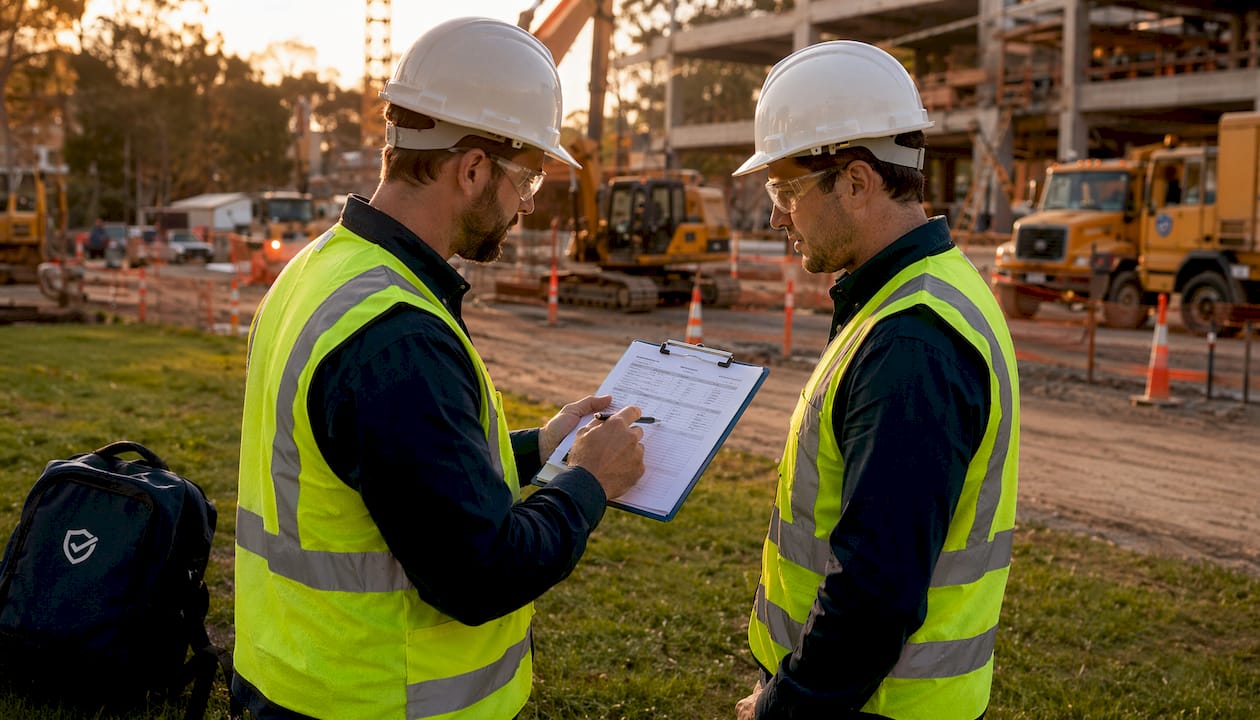
An injury and accident report captures what happened, who was involved, and what the workplace did in response. Critical elements include date, time, location, incident type, individuals involved, a factual description, contributing factors, immediate actions taken, and follow-up tasks with deadlines. Omitting even one of these fields creates a gap that OSHA inspectors and legal counsel will notice. A complete report also names the supervisor on duty and references any relevant safety procedures that were or were not followed.
Hazard reports
A hazard report documents an unsafe condition before it causes an incident. Examples include a frayed electrical cord in a manufacturing bay, a missing guardrail on a loading dock, or a chemical storage area lacking proper ventilation. The report should include a photo, the exact location, the risk level, and the corrective action deadline. Proactive hazard reporting is the clearest indicator of a mature safety culture.
Additional report types
Beyond the three primary formats, safety professionals regularly produce:
- Environmental incident reports: Spills, emissions, or waste disposal violations that trigger regulatory notification requirements.
- Fire safety reports: Inspection findings on extinguisher placement, sprinkler function, and exit accessibility.
- Exposure incident reports: Documentation of worker contact with hazardous substances, including blood-borne pathogens under OSHA 29 CFR 1910.1030.
- Security incident reports: Unauthorized access, theft, or workplace violence events requiring a documented response chain.
Each format follows the same core principle: factual, timestamped, and tied to a corrective action with a responsible party.
2. How to use safety audit checklists in effective safety reporting
A structured EHS audit checklist divides workplace safety into nine categories: Administrative, Fire Safety, Electrical, PPE, Machinery, Chemical Hazards, Ergonomics, Environmental, and Emergency Preparedness. That structure prevents inspectors from relying on memory and ensures every audit covers the same ground. Consistency across audits is what makes trend analysis possible.
Conducting EHS audits without a structured checklist routinely produces incomplete hazard detection and lower safety performance. The checklist functions as an audit trail, not just a to-do list. When a compliance officer can show an OSHA inspector a completed checklist with timestamps and signatures, the documentation speaks for itself.
| Checklist category | Typical items inspected |
|---|---|
| Administrative | Training records, safety policies, incident logs |
| Fire safety | Extinguisher tags, sprinkler heads, exit signage |
| Electrical | Panel labeling, GFCI outlets, cord condition |
| PPE | Availability, condition, proper storage |
| Machinery | Guards in place, lockout/tagout procedures |
| Chemical hazards | SDS availability, labeling, storage segregation |
| Ergonomics | Workstation height, repetitive motion controls |
| Environmental | Spill kits, waste disposal logs |
| Emergency preparedness | Evacuation routes, assembly points, drill records |
Customizing a checklist for your specific workplace takes one additional step. A construction site needs fall protection and excavation items. A manufacturing facility needs machine guarding and confined space entries. Start with the nine-category model and add industry-specific line items before the first audit cycle.
Pro Tip: Date-stamp every checklist at the start and end of the inspection. That timestamp proves the audit was completed in real time, not reconstructed after the fact.
3. How modern tools enhance safety report writing and documentation
AI-assisted, photo-based reporting lets inspectors focus on identifying hazards rather than writing descriptions. The AI generates report text directly from uploaded photos, reducing the time between observation and documentation. That speed matters because delayed reports lose accuracy and create liability gaps.
Photo evidence embedded in safety reports is now a recognized best practice. Photos provide context that written descriptions cannot fully capture. They also produce legally defensible records that hold up during OSHA audits and litigation. Regulatory bodies increasingly expect photo documentation as part of a complete compliance file.
The practical advantages of digital, AI-assisted reporting over manual write-ups include:
- Reduced administrative burden: Inspectors spend less time at a desk and more time on the floor.
- Improved consistency: AI-generated descriptions follow a standard format every time, eliminating subjective language.
- Faster corrective action: Digital reports route automatically to the responsible party, cutting the lag between finding and fix.
- Audit-ready records: Timestamped, photo-backed reports are harder to challenge than handwritten notes.
Pro Tip: When selecting a digital reporting tool, verify that it supports offline data capture. Construction sites and manufacturing floors often have poor connectivity, and a tool that requires a live connection will fail exactly when you need it most.
4. Common mistakes in safety reporting and how to avoid them
Incomplete or subjective safety reports undermine regulatory compliance and block meaningful safety improvements. The most common errors are predictable and preventable.
- Missing incident timing. A report that says “morning shift” instead of “7:42 AM” cannot support a root cause analysis. Always record the exact time.
- No named follow-up owner. A corrective action without an assigned person is a corrective action that will not happen. Every action item needs a name and a deadline.
- Subjective language. “The area was messy” tells an auditor nothing. “Three pallets were stacked in the marked pedestrian walkway, blocking 60% of the path” is documentable and defensible.
- Missing contributing factors. Describing what happened without explaining why it happened produces a report that prevents nothing. Contributing factors drive the corrective action.
- No supporting evidence. A written description alone is the weakest form of documentation. Photos, witness statements, and equipment inspection records strengthen every report.
Before submitting any safety report, verify these five elements are present: exact date and time, full location description, named individuals involved, at least one piece of supporting evidence, and a corrective action with an owner and deadline. That five-point check takes under two minutes and closes the most common compliance gaps.
Key takeaways
A well-structured safety report is the foundation of OSHA compliance, corrective action, and a proactive safety culture that reduces incidents over time.
| Point | Details |
|---|---|
| Use all six report types | Near-miss, injury, hazard, environmental, fire, and exposure reports each serve a distinct compliance purpose. |
| Anchor every report to a corrective action | Name a responsible owner and set a deadline for every finding, or the report produces no change. |
| Apply a nine-category EHS checklist | Structured checklists prevent missed hazards and create a consistent audit trail across inspection cycles. |
| Embed photo evidence | Photos provide legally defensible context that written descriptions alone cannot supply. |
| Eliminate subjective language | Replace vague descriptions with specific, measurable facts to satisfy OSHA documentation standards. |
What I’ve learned about safety reports that most guides won’t tell you
After years of working alongside safety managers in construction and manufacturing, one pattern stands out. The organizations with the best safety records are not necessarily the ones with the most reports. They are the ones whose reports consistently lead to closed corrective actions. A report that sits in a folder is worse than no report at all. It creates a paper trail showing the hazard was known and ignored.
The second lesson is about language. Safety professionals often write reports the way they talk, which means the language is casual, approximate, and full of assumptions the reader does not share. “The worker slipped near the loading dock” is a story. “Worker slipped on standing water at the northeast corner of Loading Dock 3 at 6:15 AM on a Monday, resulting in a left knee contusion” is a record. The difference between those two sentences is the difference between a report that drives change and one that gets filed and forgotten.
Technology has genuinely changed what is possible here. AI-powered reporting tools generate structured descriptions from photos in seconds. That is not a convenience feature. It is a quality control mechanism. When the format is standardized and the evidence is embedded, the report is harder to dismiss and easier to act on. The organizations I have seen adopt this approach consistently report shorter corrective action cycles and cleaner audit outcomes.
The uncomfortable truth is that most safety reporting problems are not technology problems. They are accountability problems. The checklist, the template, and the AI tool all fail if no one reviews the report and assigns the corrective action. Build the review step into the workflow, not as an afterthought, but as the required final step before a report is considered complete.
“Effective safety reporting turns raw data into clear, proactive operational decisions. MySafetySolution generates clean, standardized reports that communicate compliance status clearly to executives, inspectors, and clients alike.”
— Matthew Hoffman, President - MySafetySolution
How My Safety Solution supports complete safety documentation
Safety professionals managing deskless workforces in construction, manufacturing, and warehousing face a specific documentation challenge. Reports need to be created in the field, not reconstructed at a desk hours later. My Safety Solution addresses that directly with mobile-enabled safety meeting management, digital attendance tracking, and AI-powered content generation that produces tailored safety topics for every meeting.
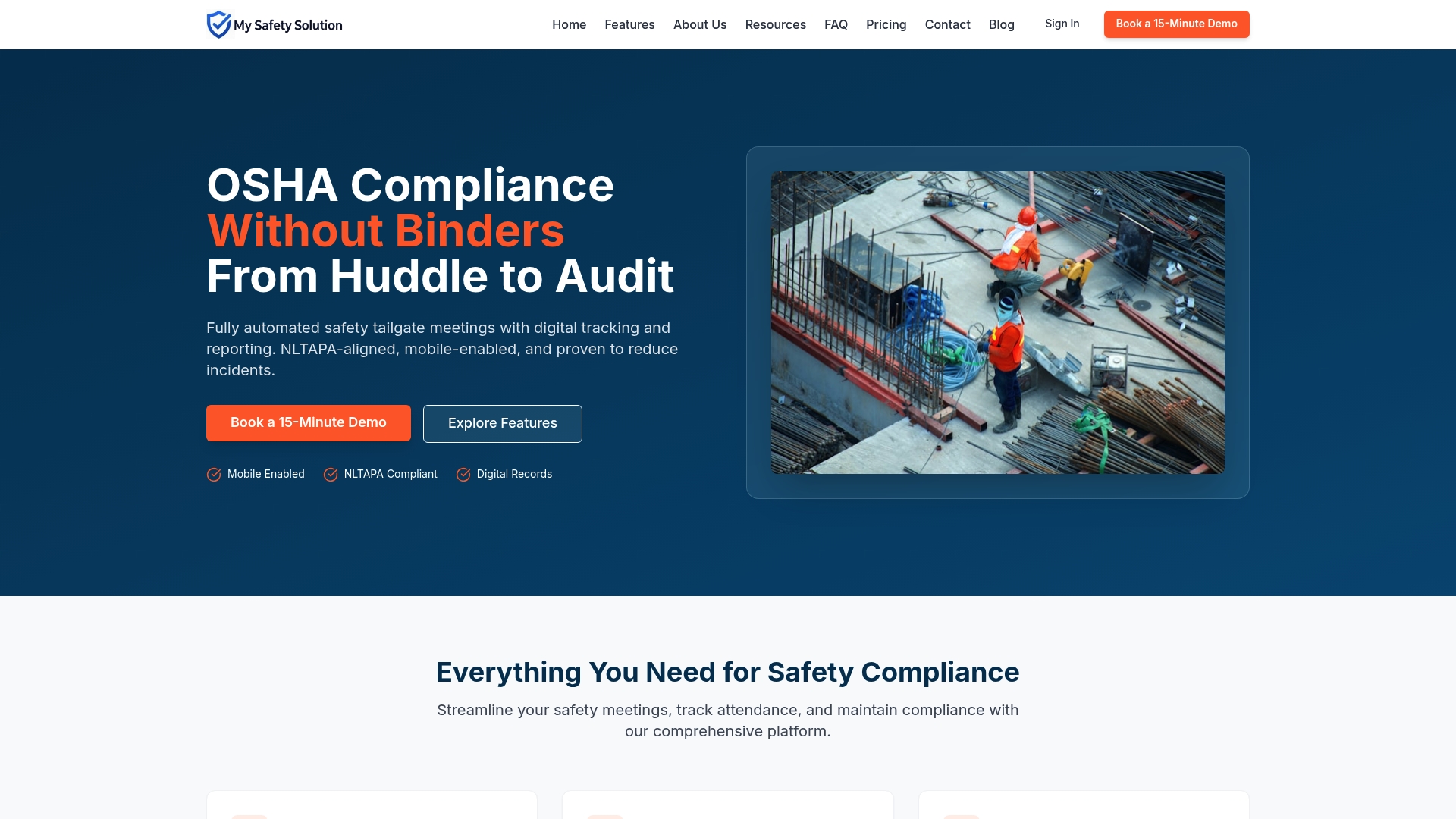
The platform generates comprehensive digital records that satisfy OSHA compliance requirements and create a clean audit trail without the patchwork of spreadsheets and paper forms. For manufacturing safety teams and warehousing operations, My Safety Solution reduces the administrative friction that causes reporting gaps and compliance risk. Companies using the platform report reduced incident rates and improved compliance records. If your current reporting workflow leaves corrective actions unassigned or documentation incomplete, My Safety Solution is built to close those gaps.
FAQ
What should every safety report include?
Every safety report requires an exact date and time, full location, named individuals involved, a factual description, contributing factors, supporting evidence such as photos, and a corrective action with an assigned owner and deadline.
What is a near-miss report?
A near-miss report documents an incident that could have caused injury or damage but did not. It should record incident severity, immediate actions taken, and a named person responsible for follow-up.
How does a safety audit checklist improve reporting?
A structured checklist divides the workplace into defined inspection categories, preventing missed hazards and creating a consistent, timestamped audit trail that satisfies OSHA documentation requirements.
What makes a safety report legally defensible?
Photo evidence, exact timestamps, specific location descriptions, and named corrective action owners make a safety report defensible during OSHA inspections and legal proceedings.
How can AI tools improve safety report quality?
AI-assisted reporting generates standardized descriptions from photos, eliminates subjective language, and routes corrective actions automatically, reducing both administrative time and documentation errors.