Managing safety meetings, incident records, and compliance across multiple sites quickly grows difficult as spreadsheets and paper logs create record gaps and errors. Many safety incident tracking tools require complex setups, lack mobile workflows, or charge extra for multi-company controls and advanced reporting. This comparison details features, pricing, and support across four safety meeting management platforms so safety managers and consultants can select a solution that matches their regulatory and operational needs.
Table of Contents
My Safety Solution
At a Glance
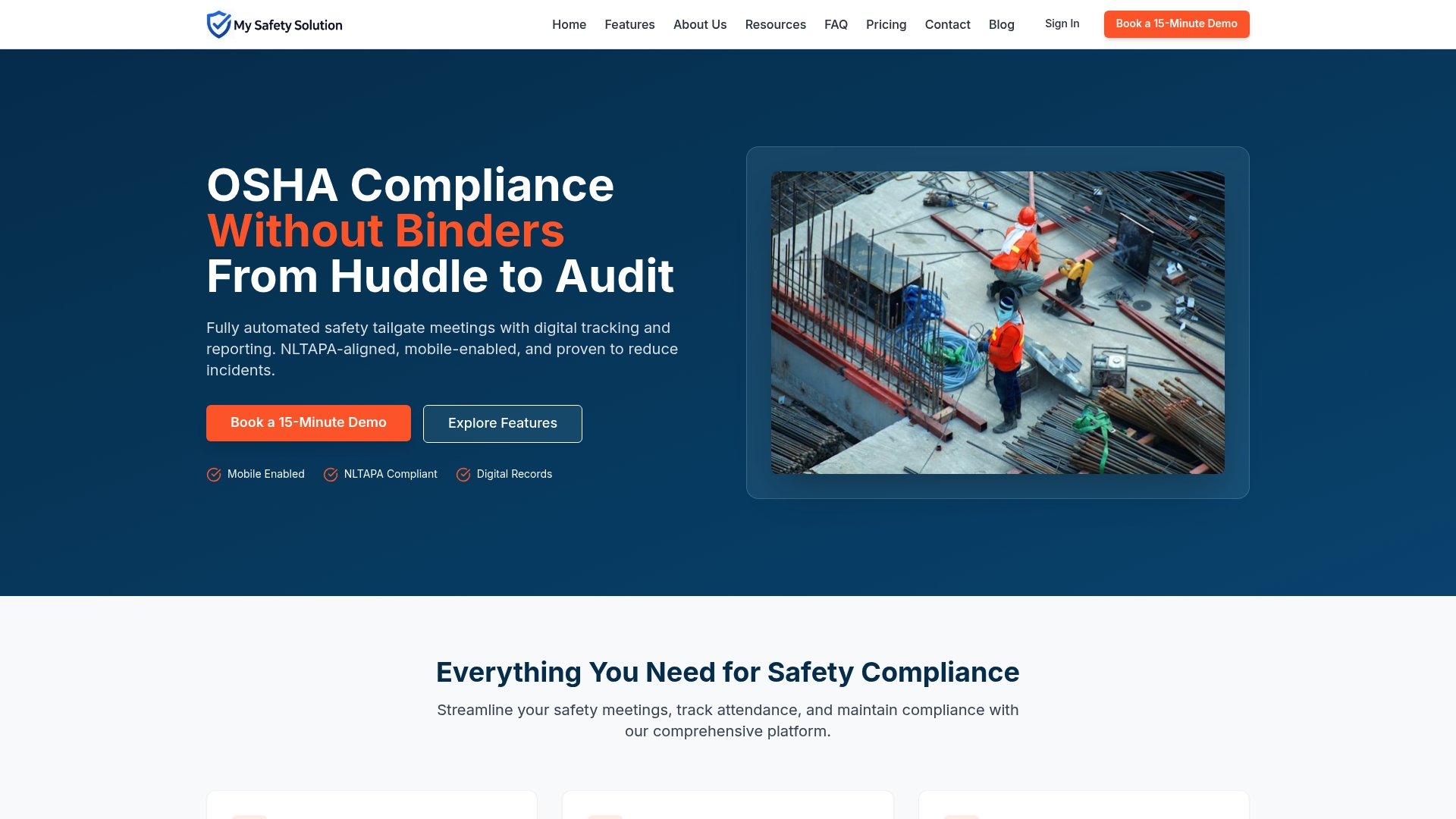
AI-powered content generation produces industry-specific safety topics in real time for construction, manufacturing, and transportation crews. The platform logs digital signatures and timestamps for tailgate meetings. Mobile-enabled and NLTAPA-compliant workflows reduce paperwork for deskless crews.
Core Features
Digital safety tailgate meetings include timestamped attendance and reporting that support OSHA documentation requirements. Role-based access, multi-company controls, recurring scheduling, and calendar views let consultants manage several client programs from one dashboard. The platform also offers preloaded, customizable topics and push delivery of safety content to client companies.
Key Differentiator
The standout capability is AI-powered real-time safety content generation tailored to specific hazards and compliance standards. That feature creates topic drafts aligned to industry norms and let’s safety managers edit content before deployment. It shortens prep time for daily or weekly tailgate meetings.
Pros
The vendor advertises reduced incident rates and improved compliance records. The product automates OSHA-compliant meeting documentation and produces audit-ready records with signatures, timestamps, and exportable compliance reports. Multi-company management and role controls cut administrative duplication for consultants who run programs across sites.
Cons
- Plans start at $99/month, which may be a consideration for very small organizations as higher tiers add capacity and features.
Who It’s For
Safety managers and safety consultants overseeing high-risk, deskless workforces will find this platform practical. Teams with multiple sites or client portfolios benefit from the multi-company dashboard and role-based access. Organizations that need mobile meeting delivery and clear audit trails will see immediate workflow gains.
Unique Value Proposition
Role-based multi-company controls let consultants push tailored topics directly to client accounts and centralize records. That setup reduces duplicate setup work and keeps each client account audit-ready without separate spreadsheets. Combined with real-time topic drafting, the workflow shifts time from paperwork to field supervision.
Real World Use Case
A safety consulting firm manages safety meetings for dozens of construction sites from one dashboard. Consultants generate industry-specific topics with AI, push them to each site, and collect digital signatures at the tailgate. The firm produces exportable compliance reports for OSHA inspections and cuts weekly admin hours.
Pricing
Plans start at $99/month for small teams and scale for growing and larger organizations. All plans include a 30-day free trial so teams can evaluate adoption and reporting before committing. Upgraded tiers add capacity, multi-company features, and advanced reporting.
Website: https://mysafetysolution.com
SafetyStratus
At a Glance
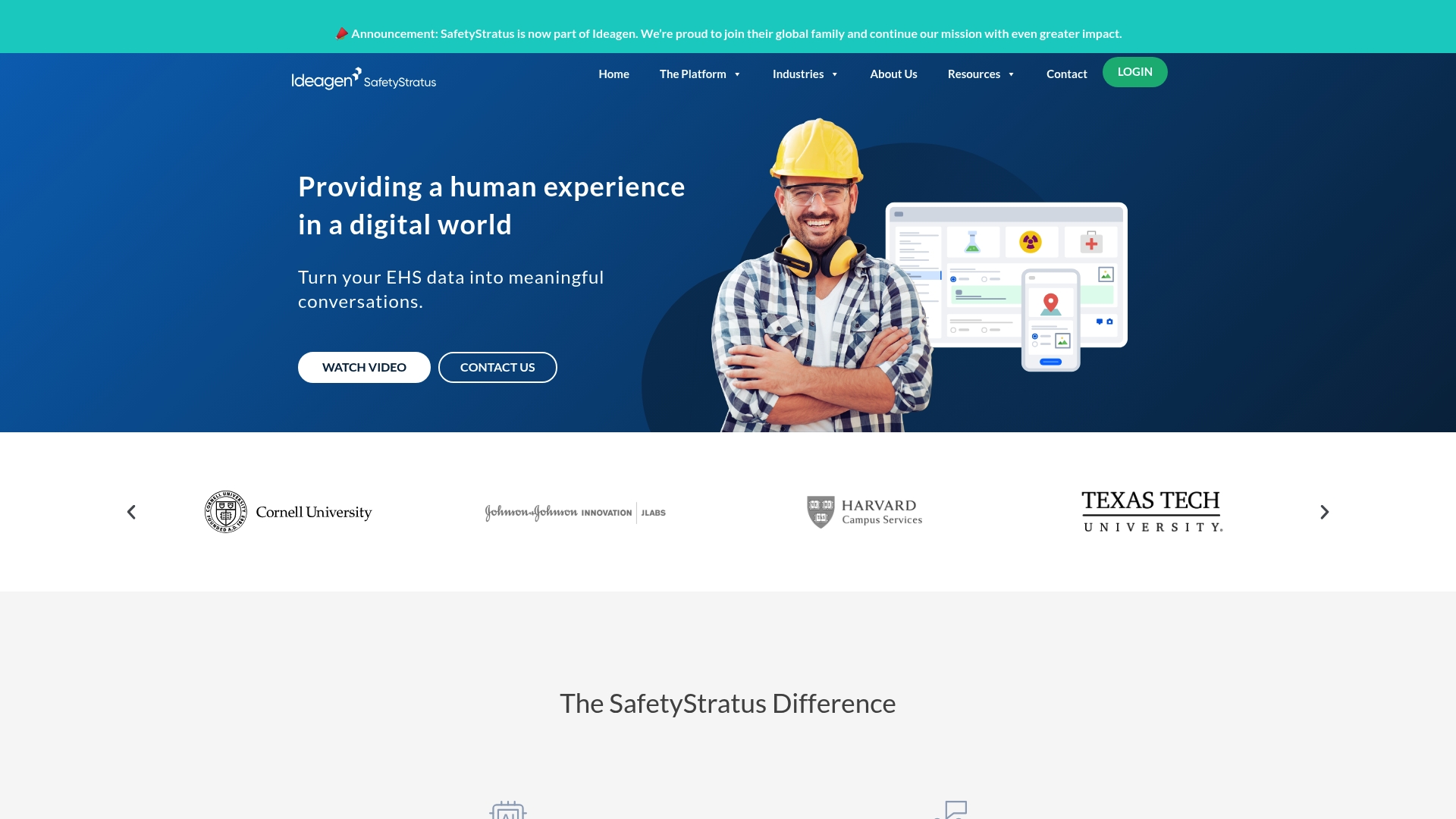
Harvard University uses SafetyStratus to run a university wide inspection system that supports real time data collection and collaboration. The product is part of Ideagen and targets enterprise environmental, health, and safety programs across healthcare, manufacturing, construction, and academia. Safety and compliance teams use it to centralize incident reporting, chemical inventories, audits, and occupational health records.
Core Features
The platform combines asset management, electronic forms, and workflow management with specialized modules for biosafety, laboratory safety, and radiation safety. It includes chemical inventory control, Safety Data Sheet management, permit and license tracking, and hazardous waste handling tools. Analytics and dashboards visualize incident trends, inspection outcomes, training status, and ESG assessment metrics for compliance reporting.
Key Differentiator
SafetyStratus positions itself as a single scalable system that brings many EHS processes under one roof. The vendor emphasizes advanced analytics that link incidents to corrective actions and training needs. That integration reduces data fragmentation across audits, inspections, incident investigations, and occupational health records.
Pros
The platform delivers an integrated set of modules that cover incident reporting, inspections, training, and chemical management, which reduces the need for multiple point tools. Its cloud based access supports remote data entry and real time updates across sites, useful for multi site facilities and university campuses. The analytics and dashboarding aid continuous improvement by making audit trails and corrective action status visible to safety and compliance teams.
Cons
- Limited public pricing. The vendor does not publish standard tiers and pricing may be customized for each client.
- Significant setup and training required. Large configuration efforts may be needed before full deployment.
- Integration and customization can be challenging. Third party reviews report occasional difficulty with custom connectors.
When It May Not Fit
Small single site organizations with minimal IT support may find implementation overhead too large for their needs. Teams that require a simple lightweight incident log will likely find the platform more complex than necessary. Organizations with tight budgets should plan for a potentially higher total cost of ownership.
Notable Integrations
- Laboratory management tools for sample and protocol linkage.
- HR systems to sync personnel, certification, and training records.
- Regulatory compliance databases for permit and reporting lookups.
- Learning management systems to track and assign training and re certification.
Who It’s For
Large organizations and institutions that run complex safety, compliance, and occupational health programs will gain the most value. Typical buyers include universities, hospital systems, manufacturing plants, and construction firms with multiple locations. Compliance officers who need centralized audit trails and cross module reporting will find the platform aligned with enterprise needs.
Real World Use Case
Harvard University deployed SafetyStratus to standardize inspections across departments and collect observations in real time. The system linked inspection findings to corrective actions and training assignments, improving visibility for campus safety teams. That deployment shows how the platform supports collaboration and regulatory documentation at scale.
Pricing
Not publicly disclosed. Pricing is typically customized to account for company size, module selection, and integration scope. Prospective buyers should request a tailored quote and scope of work from the vendor.
Website: https://safetystratus.com
Lucidity
At a Glance
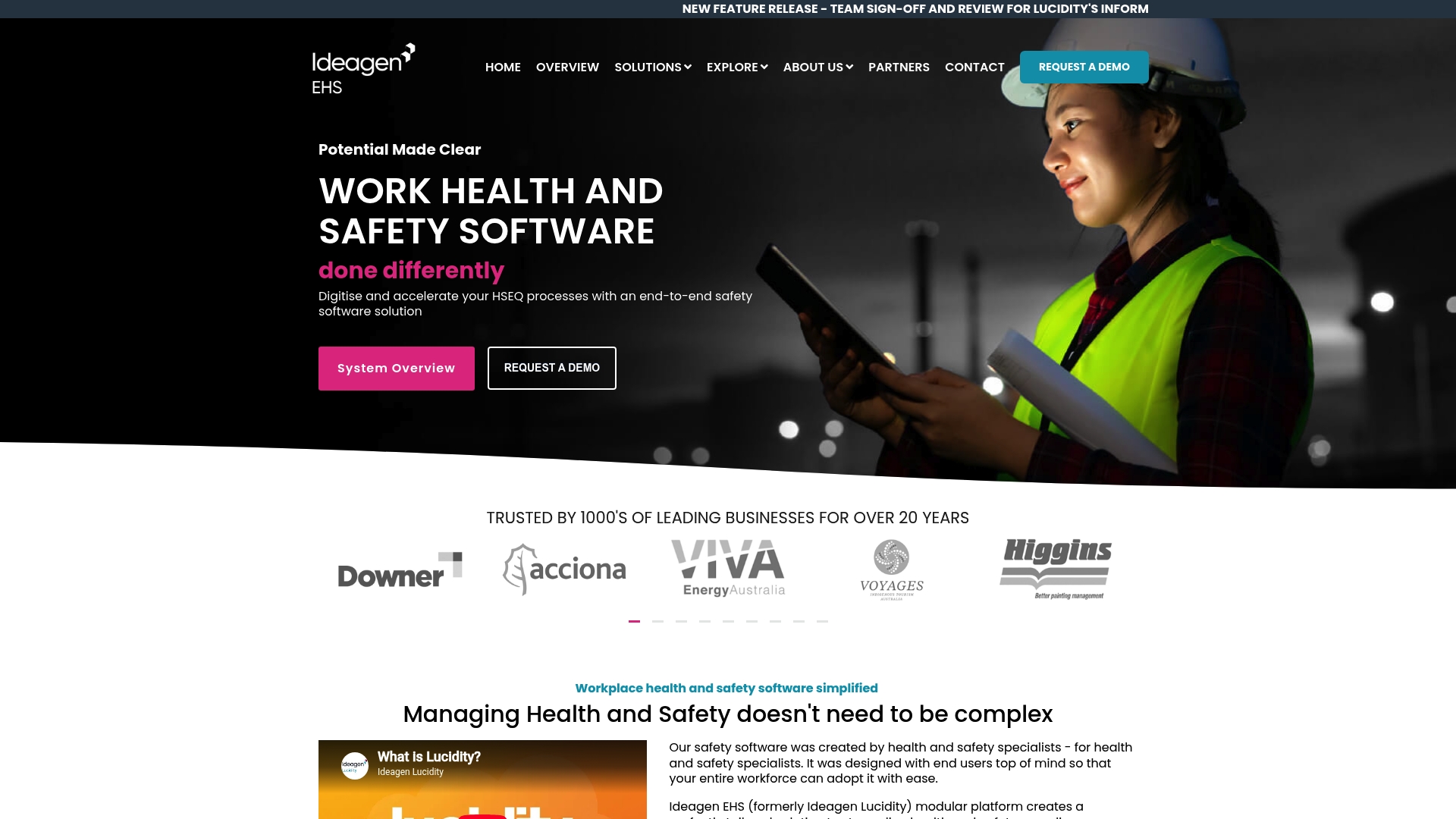
Lucidity, now rebranded as Ideagen EHS, brings a modular WHS platform together with built-in business intelligence dashboards. The system centralizes incident, hazard, and risk records across multiple sites and connects on site personnel and remote contractors on one platform. That combination targets teams that need consolidated reporting and analytics for HSEQ programs.
Core Features
The platform offers a modular structure for safety, environmental, quality, risk, and incident workflows, so organizations can add only the modules they need. It includes incident, hazard, and risk management plus site safety functions such as contractor and visitor tracking, document and policy control, and a learning management interface for training and competency tracking. Built in dashboards and BI tools surface trends and support compliance reporting.
Key Differentiator
The single strongest differentiator is the modular platform matched with embedded business intelligence. Organizations can scale the system by adding modules for specific HSEQ needs while keeping data in a unified model. That design suits multi site operations that need both operational controls and executive level analytics.
Pros
Lucidity delivers an end to end safety management approach that groups incident capture, document control, and training in one place. Highly configurable dashboards give safety leaders a way to compare sites and spot trends without assembling separate spreadsheets. The cloud based architecture helps connect remote crews and contractors while automation reduces manual reporting work.
Cons
- Complex onboarding and a steep learning curve for frontline users. Training investment is often required before the system runs smoothly.
- Premium features and deep customization come with higher costs that can push budgets up. Small teams may find total cost prohibitive.
- Some customers report integration challenges when tying Lucidity to existing enterprise systems. Additional engineering work may be needed.
- Requires ongoing user training and governance to avoid fragmented use across multiple sites.
When It May Not Fit
Lucidity may not fit small operations with simple tracking needs or limited IT support. Organizations that need a lightweight incident log without analytics will likely overpay. Companies with limited change management capacity should plan for a multi week onboarding and dedicated training resources.
Who It’s For
Mid sized to enterprise organizations in construction, manufacturing, healthcare, and similar high risk sectors will get the most value. Teams with multiple locations or many contractors who need consolidated reporting and analytics will find the platform appropriate. Organizations that plan for dedicated onboarding and administration will see the best results.
Real World Use Case
A construction firm implemented Lucidity to centralize incident reporting, risk assessments, training records, and compliance tasks across several active sites. According to the company, the rollout improved safety culture and reduced accidents, while managers gained clearer audit trails and trend reports.
Pricing
Pricing is not publicly listed. The vendor requires prospective customers to contact sales for a tailored quote. Expect costs to reflect modular choices, customization needs, and the scale of deployment.
Website: https://lucidity.io
LifeSafety.ai
At a Glance
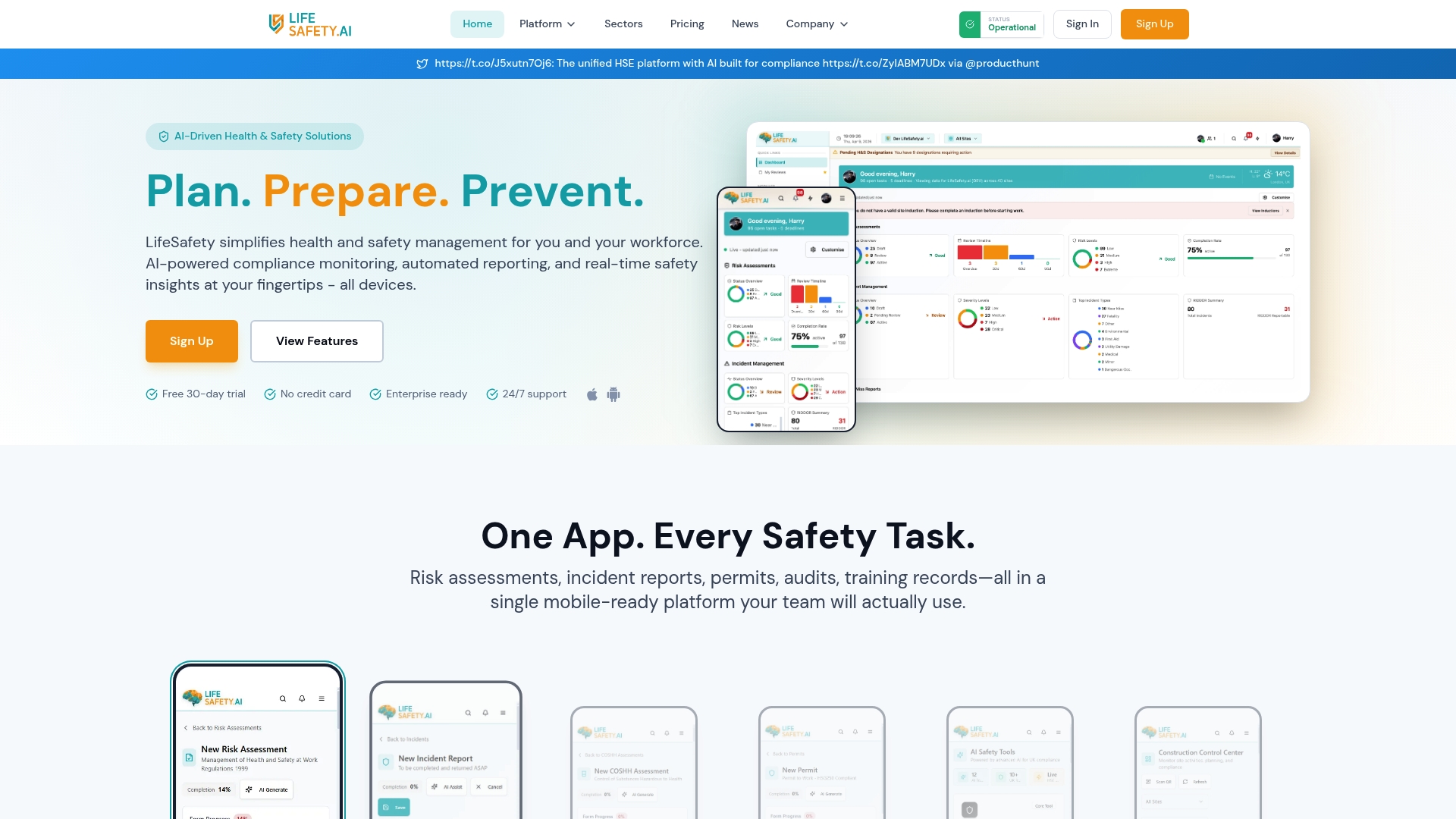
Over 200 integrated safety modules map to specific tasks such as risk assessments, incident reporting, fire safety, and electrical inspections. According to the company, the platform includes features aligned with UK rules such as RIDDOR, CDM 2015, BS standards, and GDPR compliance. It combines a mobile reporting app with AI powered monitoring and live dashboards for operational visibility.
Core Features
AI powered monitoring highlights potential compliance gaps and feeds KPIs to real time dashboards that support automated reporting. A mobile app captures field inspections, incident reports, permits, and training records and syncs them to a central record. Legislation specific workflows and module templates reduce manual checklist mapping and help produce audit evidence quickly.
Key Differentiator
Built around UK regulation needs, the product pairs its large module library with AI tools to reduce manual cross referencing between standards and checklists. The breadth of modules lets teams select modules for construction, facilities, and manufacturing and apply them directly to day to day tasks. That focus on UK rules separates it from global, generic safety products.
Pros
Tailored regulatory coverage helps teams link tasks to RIDDOR and CDM 2015 requirements, saving time during audits. The module library offers a wide set of ready made templates for inspections, permits, and incident reports, which reduces form building. Mobile reporting and automated dashboards cut paperwork and speed evidence gathering for compliance reviews.
Cons
-
The platform has a noticeable learning curve for new users, according to third party reviews. Training time may be needed for site teams.
-
Very small organizations that only need basic checklists may find the feature set overwhelming. The breadth of modules can add operational complexity.
-
Ongoing pricing specifics beyond the free trial are not fully detailed in public materials. That lack of clarity can complicate budget planning.
-
Customizing modules and reports may require vendor support or internal training resources.
When It May Not Fit
Organizations with minimal safety management needs will likely overpay for unused modules. Teams without a budget for training or vendor onboarding will struggle with customization. International firms that need non UK regulatory mapping will find the local focus too narrow.
Who It’s For
UK based safety managers and compliance officers in construction, manufacturing, and facilities management who must follow UK regulation will benefit most. It suits teams that need a single system to hold inspections, permits, and training records. Mobile first operations that require field reporting will find the app useful.
Real World Use Case
A UK construction firm used the platform to replace paper audits and to centralize incident reports across sites. Inspectors used the mobile app to file incidents and attach photos, and managers pulled automated reports for safety meetings. The firm reduced time spent assembling audit evidence and improved response times to site issues.
Pricing
Free trial available. Paid plans start at £15 per user/month when billed monthly and £12 per user/month on annual billing. Exact costs for add on services or extended support are not listed publicly.
Website: https://lifesafety.ai
Comparison of alternatives
In selecting a safety meeting management software solution, understanding the unique strengths of each option aids in identifying the fit for your needs.
Real-time Safety Content Generation
A standout feature of My Safety Solution is its ability to draft industry-specific safety topics in real time using artificial intelligence. This capability greatly reduces the preparation time required for safety tailgate meetings, enabling safety managers to allocate their time more effectively toward on-site supervision. Competitors such as SafetyStratus, Lucidity, and LifeSafety.ai offer pre-defined modules and templates, which, although effective, are not as dynamic or customizable in the immediate context of meeting preparation.
Integration for Specialized Environments
SafetyStratus excels in specialized safety environments like laboratories and hazardous materials management, providing dedicated modules for these sectors. For large organizations that require such specific capabilities, this platform aids in centralizing and improving operational controls. In contrast, while My Safety Solution focuses on deskless workforce coordination and compliance reporting, it does not specialize in niche configurations like SafetyStratus.
Best fit
- Organizations managing contractor sites and compliance-ready records for mobile teams will benefit most from My Safety Solution, offering real-time content creation tailored to immediate safety needs.
- Large enterprises necessitating EHS modules for specialized safety features and integrations will find SafetyStratus a choice, especially for laboratory and hazardous waste management.
- Firms requiring configurable analytic reporting dashboards combined with modular safety management would benefit from Lucidity.
- UK-based teams prioritizing strict regulatory adherence to standards like RIDDOR will find LifeSafety.ai perfectly aligned with their compliance requirements, with templates tailored to the UK market.
Our pick
My Safety Solution is a leading recommendation for organizations prioritizing mobile readiness, rapid and relevant safety content preparation, and compliance reporting mechanisms. Its AI-assisted tools significantly reduce manual workloads while ensuring audit readiness. However, if advanced analytics or specialized modules are more pertinent to your oversight, exploring alternatives like SafetyStratus or LifeSafety.ai would be advisable. Overall, My Safety Solution is especially advantageous when real-time capabilities for drafting and managing safety meeting content efficiently are required.
Here is a comparison of leading safety meeting management software to help identify which product aligns best with your organization’s needs.
| Product | Key Differentiator | Best For | Pricing | Notable Limitation |
|---|---|---|---|---|
| My Safety Solution | AI-generated real-time safety content | Safety consultants managing multi-site clients | Starting at $99/month | Entry cost may deter very small organizations |
| SafetyStratus | Scalable system for EHS processes | Enterprise compliance programs in varied sectors | Price not published | Initial configuration and training may require significant effort |
| Lucidity | Modular platform with built-in analytics | Mid-sized to large teams needing HSEQ reporting | Price not published | Complexity and learning curve for users |
| LifeSafety.ai | Extensive module library tailored to UK standards | UK-based teams needing streamlined compliance | From £15 per user/month | Overly complex for teams with basic safety needs |
How Can Safety Incident Tracking Software Reduce Incident Rates and Compliance Gaps?
Managing safety incidents and compliance documentation for high-risk, deskless workforces demands precision and efficiency. My Safety Solution addresses this challenge by automating safety meeting management with AI-powered, industry-specific content generation and digital attendance tracking. This mobile-enabled platform helps safety managers reduce paperwork while producing audit-ready records that meet OSHA requirements. Teams overseeing multiple sites or client portfolios benefit from its role-based multi-company controls that eliminate the friction of duplicate setup work.
Key benefits include:
- Automated OSHA-compliant documentation with digital signatures
- Tailored safety topics generated in real time for construction and manufacturing
- Mobile delivery that fits deskless workforce workflows
Explore My Safety Solution now to reduce administrative burdens and improve safety meeting compliance. See how digital records and AI-generated content can reduce incident rates and enhance your audit readiness.
FAQ
How does My Safety Solution enhance safety meeting management?
My Safety Solution generates digital safety tailgate meeting attendance reports with timestamps and signatures. This feature supports OSHA documentation requirements and helps ensure compliance during safety meetings. Teams should expect streamlined documentation processes for improved accountability and record-keeping.
What is the difference between My Safety Solution and SafetyStratus?
SafetyStratus offers an integrated set of modules for incident reporting, inspections, training, and chemical management, which can cover multiple EHS processes without the need for various point tools. My Safety Solution excels in generating real-time, industry-specific safety content that is easily editable for safety managers. If user needs focus on tailored content generation, My Safety Solution will be more suitable.
Can I use My Safety Solution for mobile meeting delivery?
Yes, My Safety Solution enables mobile access for delivering safety content directly to field teams. The platform’s mobile-friendly interface helps reduce paperwork and ensures that all employees can participate in safety meetings, thereby increasing engagement and compliance.
Which platform helps reduce administrative duplication?
My Safety Solution minimizes administrative duplication by allowing consultants to manage multiple client programs from a single dashboard. The multi-company controls and role-based access are designed to efficiently handle several accounts without the need for separate setups. This setup simplifies operational management for busy safety consultants.
Does My Safety Solution support customizable safety topics?
Yes, My Safety Solution features preloaded, customizable safety topics that can be tailored to fit specific client needs and compliance regulations. This capability allows safety managers to address specific hazards effectively, ensuring that tailored safety content reaches the right audience.