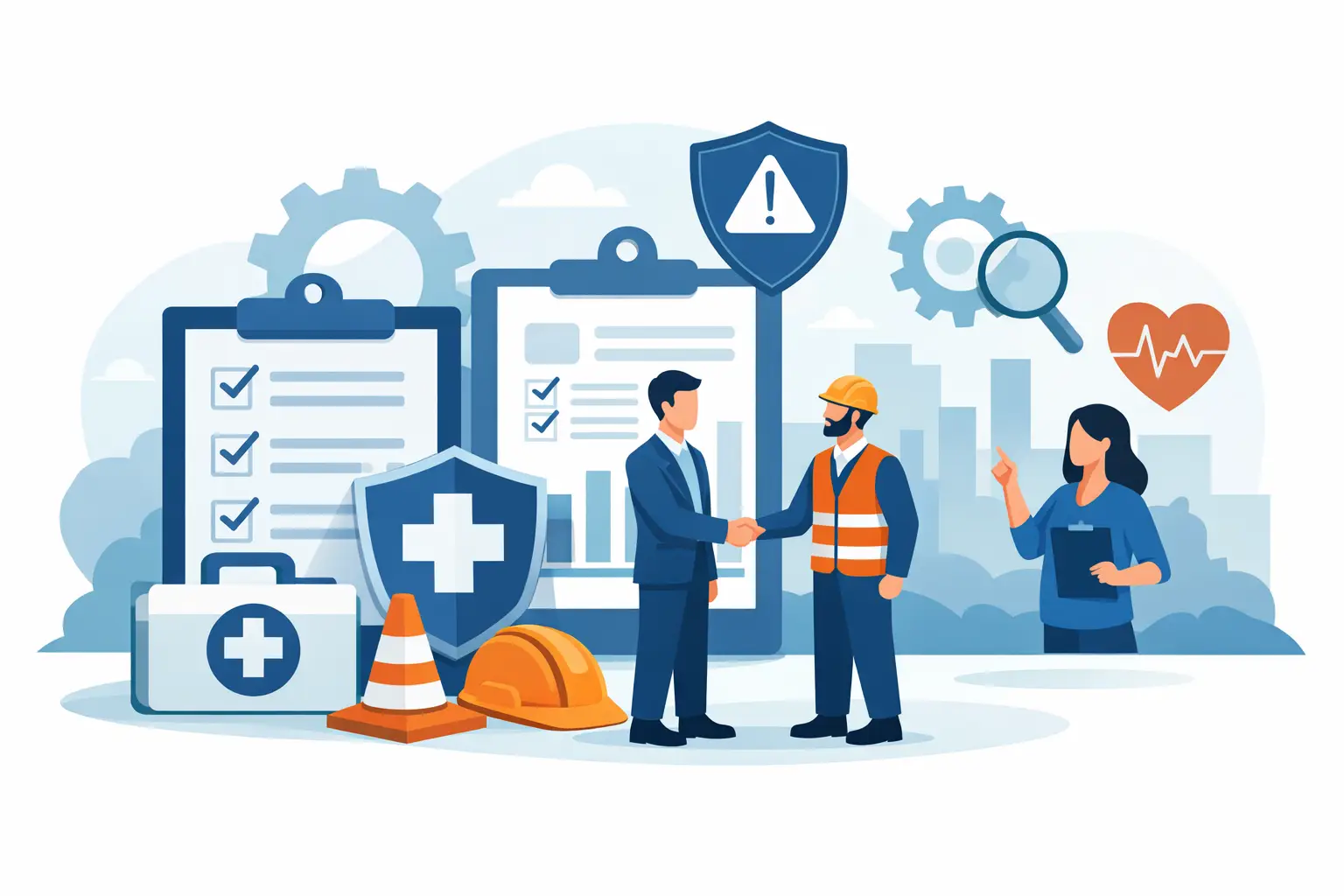
A missed inspection at one site, expired training at another, and an incident report sitting in someone's inbox for three days - that is usually how safety problems show up in the real world. If you are asking what is health and safety management system, the practical answer is this: it is the structure a business uses to control safety work consistently, document it properly, and improve performance over time.
For companies with regulatory exposure, mobile teams, or multiple facilities, safety cannot rely on memory, spreadsheets, and disconnected forms. A health and safety management system gives the organization a defined way to identify hazards, assign responsibility, track required actions, maintain records, and verify that safety processes are actually happening.
What is health and safety management system in practice?
In practice, a health and safety management system is a formal framework for managing workplace safety risks and compliance obligations. It brings policies, procedures, responsibilities, inspections, training, incident reporting, corrective actions, and performance monitoring into one controlled process.
The key point is that it is a management system, not just a collection of safety documents. Many companies have written policies and still struggle with inconsistent execution. A true system connects the written requirements to day-to-day operations so leaders can see what is complete, what is overdue, and where risk is building.
That distinction matters. A binder on a shelf may satisfy a paperwork requirement during a quiet month. It does very little when the business is growing, teams are spread across locations, and regulators or customers expect proof that safety controls are active and current.
The core purpose of a health and safety management system
The purpose is straightforward. It helps a business prevent injuries, reduce operational risk, meet regulatory requirements, and create accountability across the organization.
Most safety failures are not caused by a total absence of concern. They come from inconsistency. One supervisor documents inspections thoroughly while another does not. One site completes training on schedule while another lets certifications lapse. An incident gets reported, but the corrective action is never verified. A management system reduces those gaps by creating repeatable workflows and visibility.
For operations leaders, that means better control. For safety managers, it means fewer manual follow-ups and stronger audit readiness. For business owners, it means safety becomes a managed operational function instead of a reactive administrative burden.
What a health and safety management system typically includes
The exact design depends on the company, its industry, and its risk profile. A construction contractor managing subcontractors and job sites needs a different level of field control than a manufacturer focused on machine guarding, lockout procedures, and plant inspections. Still, most systems include the same core elements.
Policy and leadership responsibility
The system starts with management direction. That includes the company's safety policy, defined responsibilities, reporting expectations, and oversight structure. Without clear ownership, safety tasks tend to become informal, which is where delays and inconsistency begin.
Hazard identification and risk assessment
A business needs a reliable process to identify hazards, assess risk, and decide what controls are required. This may involve job hazard analyses, pre-task planning, routine inspections, or site-specific risk reviews. The method can vary, but the process needs to be documented and repeatable.
Training and competency management
Training is not just about completion records. A working system tracks who needs training, what type, when it expires, and whether it aligns with job duties. This is especially important in organizations with role-based requirements, recurring certifications, or frequent turnover.
Incident reporting and investigation
When incidents, near misses, or unsafe conditions occur, the system should define how they are reported, reviewed, investigated, and resolved. Fast reporting matters, but follow-through matters more. If the root cause is identified and no corrective action is closed, the system is incomplete.
Inspections, audits, and corrective actions
Routine inspections and internal audits help verify whether controls are functioning. Corrective actions then close the loop. This is one of the most practical measures of system health because it shows whether issues are being addressed or simply recorded.
Documentation and record control
Safety records need to be accurate, current, and accessible. That includes policies, procedures, training logs, inspection forms, incident reports, corrective actions, and compliance documentation. In a regulated environment, poor record control can become a risk of its own.
Performance review and continuous improvement
A management system should produce information leaders can use. Trends in incidents, overdue actions, training completion, inspection findings, and recurring hazards help management decide where controls are weak and where resources should go next.
Why businesses move from manual safety processes to a system
Many companies already have some version of these activities. The issue is that they often exist in separate tools and separate habits. One team uses paper forms, another uses email, HR tracks training in one place, operations tracks inspections in another, and no one has a complete view.
That fragmented setup may work at a small scale, but it tends to break down as complexity increases. Multi-site operations, field teams, contractor activity, and recurring compliance tasks create too many moving parts to manage reliably through manual coordination alone.
This is where a digital approach becomes valuable. A platform-based system can centralize safety data, standardize workflows, and create visibility across locations and teams. It does not replace management judgment, but it does make execution easier to control. For businesses trying to improve consistency, reduce administrative effort, and maintain audit readiness, that shift is often less about convenience and more about operational necessity.
What a strong system looks like day to day
A strong health and safety management system is visible in routine operations. Training requirements are assigned and tracked before they lapse. Inspections are completed on schedule. Incident reports are reviewed promptly. Corrective actions have owners and due dates. Management can see trends without waiting for someone to compile a spreadsheet at the end of the month.
Just as important, the system supports decision-making. If one facility has repeated forklift incidents or one region has a backlog of unresolved actions, leadership should be able to identify that quickly. Safety performance improves when issues are visible early enough to address them before they become serious events.
A weaker system often looks different. Records exist, but they are incomplete. Tasks depend on individual follow-up rather than defined workflows. Reporting is delayed. Documentation is hard to retrieve. People are working hard, but the process is not giving them enough structure.
Common misconceptions about health and safety management systems
One common misconception is that the system is only for large enterprises. In reality, smaller companies often benefit just as much because they have less room for error and fewer administrative resources. A simple, well-controlled system is usually better than a complex one no one follows.
Another misconception is that certification defines the system. Frameworks such as ISO 45001 can be useful, especially for organizations with formal customer or contractual requirements, but a company does not need certification for the system to be effective. The real test is whether the process works consistently in daily operations.
There is also a tendency to think software alone is the system. It is not. Software supports the system by organizing tasks, records, and visibility. The underlying structure still depends on clear responsibilities, sound procedures, and management follow-through. The best results come when technology supports an already defined operational process.
How to tell if your current system is working
A useful test is to ask a few direct questions. Can you quickly confirm training status by employee and role? Can you see overdue inspections and unresolved corrective actions without manual chasing? Can you produce incident history and supporting documentation when requested? Can leadership identify recurring risks across sites or departments?
If the answer is no, the issue may not be commitment. It may be system design. Safety performance becomes difficult to manage when information is delayed, scattered, or dependent on individual effort to keep it current.
That is why many organizations are moving toward centralized safety management platforms. A system that organizes inspections, incidents, documentation, training, and action tracking in one environment gives leaders stronger control with less administrative friction. For companies managing safety at scale, that operational visibility can make the difference between reactive compliance and consistent performance.
The right health and safety management system should make safety easier to manage, easier to verify, and harder to overlook. When the structure is clear, the work gets done with more consistency - and that is where real risk reduction starts.