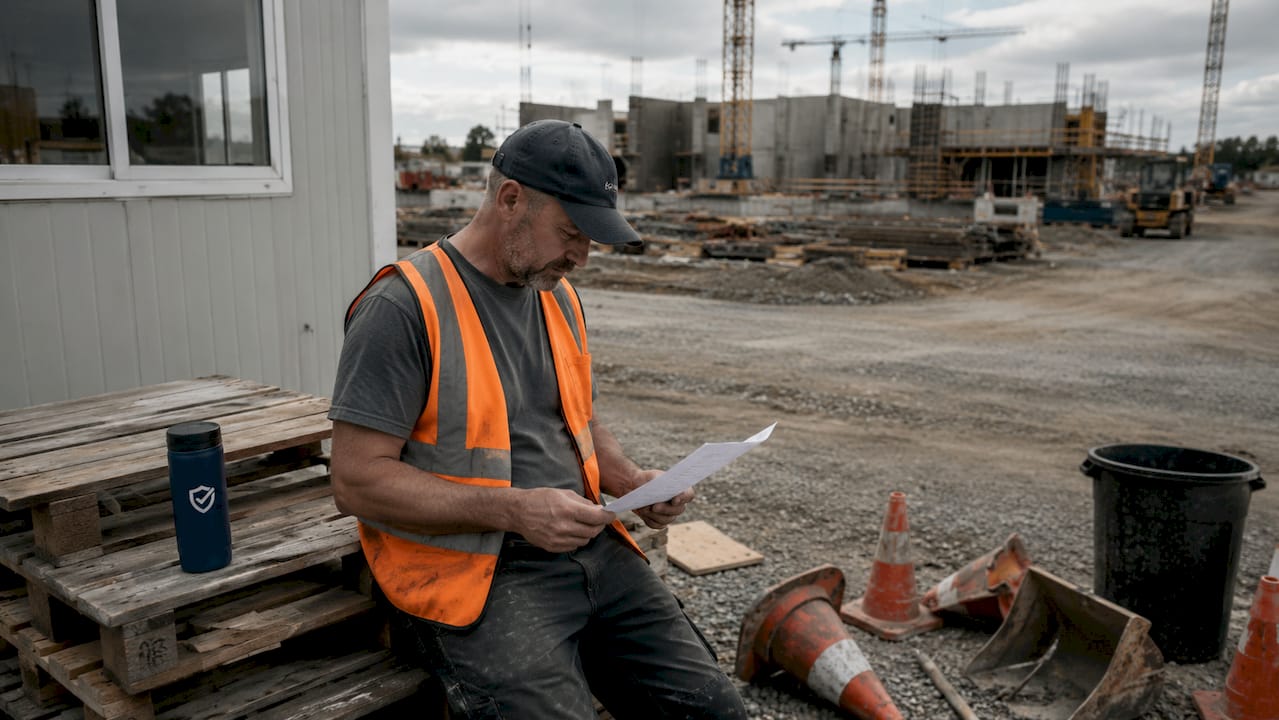
Construction safety meeting topics are carefully selected subjects that address the most pressing jobsite hazards to maximize safety and compliance in daily toolbox talks. Known in the industry as toolbox talks or tailgate meetings, these short briefings last between 5 and 15 minutes and happen directly at the work area before a shift starts. The right topic on the right day is not a formality. It is the difference between a crew that recognizes a hazard and one that walks past it. This guide gives safety managers and team leaders a practical framework for choosing, rotating, and documenting topics that hold up under OSHA scrutiny and actually reduce incidents.
What makes a construction safety meeting topic effective?
The most effective construction site safety meeting topics share one quality: they match the hazards the crew will face that day. Tailoring topics to daily tasks increases relevance and crew engagement far more than any generic safety calendar. A talk on ladder safety lands when workers are about to climb. The same talk on a day spent pouring footings is background noise.
Several criteria separate high-impact topics from forgettable ones:
- Task-specific focus. The topic should connect directly to the scheduled work. Roofing crews need fall protection. Crews working near utilities need electrical awareness.
- OSHA compliance alignment. Topics should address OSHA 29 CFR 1926 standards, particularly the Focus Four hazards: falls, struck-by, caught-in/between, and electrocution.
- Incident-triggered selection. A near miss or minor injury on site is a signal. Address the hazard immediately in the next meeting before it becomes a recordable event.
- Seasonal relevance. Heat stress belongs in summer. Cold stress and ice hazards belong in winter. Seasonal and risk-based rotation retains safety knowledge better than static, repetitive talks.
- Topic variety. Repeating the same subjects in the same order causes crews to disengage. Rotate topics deliberately to maintain attention and cover a broader range of hazards over time.
Pro Tip: Build a 13-week rolling topic calendar at the start of each quarter. Block out known seasonal hazards and project milestones first, then fill remaining slots with OSHA Focus Four topics and crew-specific exposures.
Top priority construction safety meeting topics every team should cover
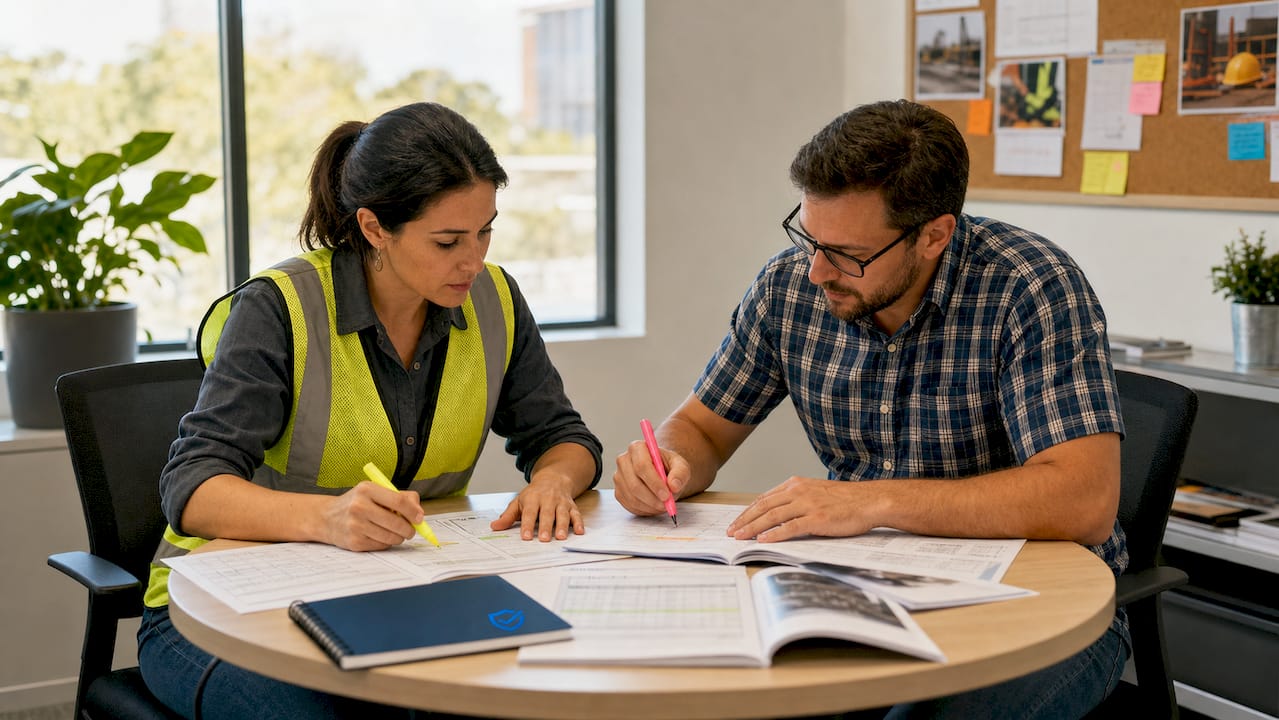
The following topics represent the highest-risk areas on American construction sites. Every safety manager should cycle through all of them regularly, with frequency adjusted by crew exposure.
1. Fall protection
Falls cause the highest number of construction fatalities of any hazard category, making fall protection the single most critical topic for any crew working at elevation. Cover harness inspection and proper fit, guardrail requirements, and the six-foot trigger height under OSHA 1926.502. Ladder safety deserves its own dedicated session. Ladder violations rank as the third most cited OSHA standard, covering setup angle, three-point contact, and inspection before use. Review construction safety statistics to show your crew the real numbers behind these rules.
2. Electrical safety
Electrocution is one of OSHA’s Focus Four fatality categories. Topics should include lockout/tagout (LOTO) procedures, ground fault circuit interrupter (GFCI) use on all temporary power, and overhead power line clearance distances. Workers often underestimate the risk of unguarded temporary wiring. A short demonstration of GFCI testing takes under two minutes and reinforces the habit.
3. Personal protective equipment (PPE)
PPE topics go beyond “wear your hard hat.” Cover how to inspect equipment before use, when to replace damaged gear, and which PPE applies to specific tasks. Hard hats, safety glasses, high-visibility vests, gloves, and steel-toed boots each have inspection criteria workers should know by memory. A PPE talk tied to a specific task, such as grinding or concrete cutting, lands far better than a generic reminder.
4. Scaffolding safety
Scaffold collapses and falls from scaffolding cause a significant share of construction injuries each year. Topics should cover the requirement for a competent person to inspect scaffolding before each shift, load capacity limits, proper access and egress, and guardrail requirements. Workers should know they have the right to refuse work on scaffolding that has not been inspected.
5. Excavation and trenching hazards
Trench collapses kill workers in seconds. OSHA 1926 Subpart P requires protective systems for any excavation five feet or deeper. Topics should cover soil classification, the role of a competent person, shoring and shielding requirements, and the prohibition on working in an unprotected trench. This topic is non-negotiable for any crew performing earthwork.
6. Fire prevention and hot work safety
Hot work, including welding, cutting, and grinding, creates ignition risks that spread fast on a site with wood framing, fuel, and debris. Topics should cover hot work permits, fire watch responsibilities, extinguisher placement and inspection, and the 35-foot clearance rule for combustibles. Review the permit process so workers understand it as a protection, not a bureaucratic hurdle.
7. Confined space entry
Permit-required confined spaces exist on most commercial and industrial construction sites. Topics should cover the definition of a permit-required confined space, atmospheric testing requirements, attendant and entrant roles, and rescue procedures. Workers who have never entered a confined space often underestimate how quickly atmospheric hazards develop.
8. Manual material handling
Overexertion injuries from lifting, carrying, and repetitive motion are among the most common causes of lost workdays in construction. Topics should cover proper lift mechanics, team lift protocols for loads over 50 pounds, and the use of mechanical assists such as forklifts, hand trucks, and pipe rollers. Connecting this topic to the day’s delivery schedule makes it immediately relevant.
How to tailor safety meeting topics to worksite conditions
Generic topics produce generic results. The most effective safety managers treat each meeting as a tactical briefing built around what the crew will actually do that day. Effective supervisors use daily safety meetings as hazard briefings focused on real, immediate risks rather than routine checklists.
A practical tailoring process looks like this:
- Review the day’s work plan. Pull the schedule the night before. Identify the three highest-risk tasks and select a topic that addresses at least one of them directly.
- Check for recent incidents. Incident-triggered topics after near misses reinforce relevant training before a repeat event occurs. If a worker slipped on a wet surface yesterday, that is today’s topic.
- Adjust for weather and season. Heat index above 91°F triggers heat stress protocols. Temperatures below 32°F require cold stress and frostbite awareness. Neither topic belongs on a mild spring morning.
- Match topics to crew trades. Topic rotation should reflect crew-specific exposure profiles. Roofing crews need fall protection more frequently than finish carpenters. Electricians need LOTO more than concrete crews.
- Collect worker feedback. Ask crews what hazards they noticed during the previous shift. Workers on the tools often spot risks that supervisors miss from the trailer.
Pro Tip: Keep a running log of topics covered by crew and date. This creates an audit trail for OSHA inspections and helps you spot gaps in coverage before they become compliance issues.
Construction safety meeting templates and agenda formats
A well-structured agenda keeps a toolbox talk on time and on point. The standard format for a construction safety meeting agenda template runs as follows:
| Agenda item | Time |
|---|---|
| Safety topic introduction | 2 minutes |
| Key hazards and controls | 5 minutes |
| Demonstration or visual aid | 3 minutes |
| Questions and crew discussion | 3 minutes |
| Attendance sign-off | 2 minutes |
The total runs 15 minutes or less, which keeps crews engaged and minimizes production delays. Documentation is not optional. OSHA requires employers to maintain records of safety training, and a signed attendance sheet with the topic, date, and presenter name is the minimum acceptable record. Digital records are preferable because they are searchable, time-stamped, and harder to lose than paper sign-in sheets.
Multimedia adds retention value when used selectively. A 90-second video clip of a scaffold collapse or a trench failure creates a visceral impression that a verbal description cannot match. Keep demonstrations short and directly tied to the topic. A live demonstration of GFCI testing or harness donning takes less time than explaining the procedure verbally and produces better retention.
Key takeaways
The most effective construction safety meeting topics are task-specific, incident-responsive, and rotated systematically to match crew exposure and seasonal conditions.
| Point | Details |
|---|---|
| Match topics to daily tasks | Select subjects that address the actual hazards the crew will face that shift. |
| Prioritize OSHA Focus Four | Falls, electrocution, struck-by, and caught-in/between cause the most fatalities and demand regular coverage. |
| Use incidents as triggers | Address near misses and minor injuries in the next meeting to prevent repeat events. |
| Rotate by crew and season | Tailor topic frequency to each crew’s exposure profile and adjust for seasonal hazards. |
| Document every meeting | Maintain signed attendance records with topic, date, and presenter for OSHA compliance. |
What I’ve learned about picking the right topics
My experience running safety programs on active construction sites taught me one thing that no training manual states clearly: the topic matters less than the timing. I have watched crews tune out a technically correct talk on fall protection because they were about to spend the day on ground-level concrete work. The same talk delivered the morning before a rooftop installation produced genuine questions and visible attention.
The mistake most safety managers make is building a topic calendar in an office and treating it as fixed. The calendar is a starting point, not a contract. When a near miss happens on Tuesday, Wednesday’s scheduled topic on fire extinguisher placement can wait. Using recent incident data to trigger refresher talks is the single highest-leverage move available to a safety manager. It signals to the crew that the meeting is connected to their actual work, not a compliance ritual.
The other shift I recommend is moving away from supervisor monologue toward crew dialogue. Ask workers what they noticed the day before. Ask what felt unsafe. The answers will surprise you, and they will give you better topics than any prebuilt template. Workers who contribute to the conversation remember the content. Workers who sit through a lecture forget it by lunch.
“Supervisors don't have time to write fresh safety curricula every morning. MySafetySolution provides thousands of trade-specific, OSHA-aligned topics so leaders can deliver impactful, relevant talks in minutes.”
— Matthew Hoffman, President - MySafetySolution
How My Safety Solution supports your safety meeting program
Running consistent, documented, and compliant construction site safety meetings is harder than it looks when you are managing multiple crews across a large project.
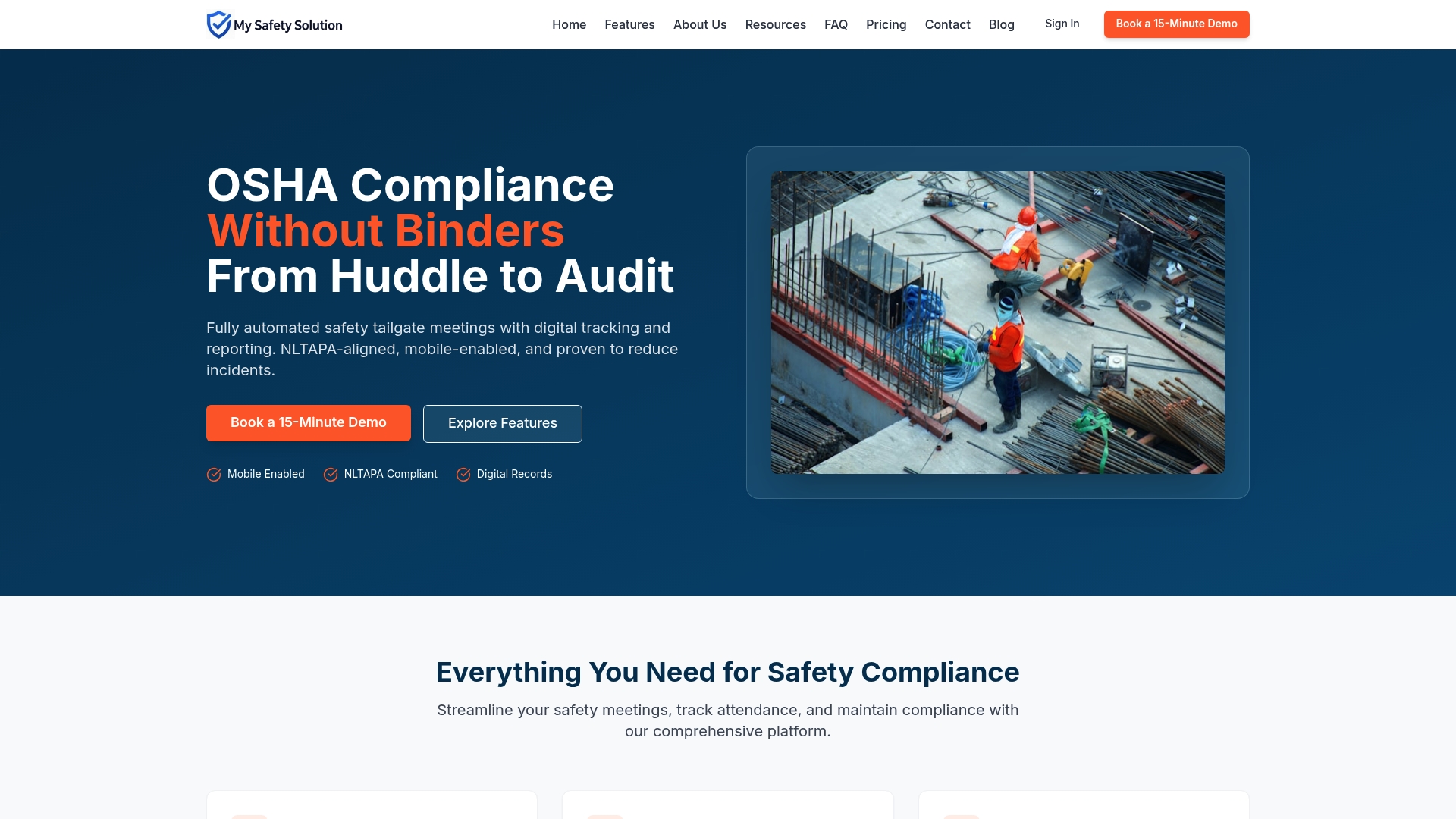
My Safety Solution automates the parts of safety meeting management that consume the most time: topic rotation, attendance tracking, and OSHA-compliant record generation. The platform’s AI-powered content generation produces tailored topics based on crew type and recent incident history, so safety managers spend less time preparing and more time leading. Digital attendance records create a complete audit trail that holds up under OSHA inspection. Companies using My Safety Solution’s compliance software report reduced incident rates and cleaner compliance records. If your current process relies on paper sign-in sheets and a shared folder of Word documents, the friction in that system is costing you time and exposing you to compliance risk.
FAQ
What are the most important construction safety meeting topics?
The highest-priority topics are fall protection, electrical safety, PPE use, scaffolding, and excavation hazards. These align with OSHA’s Focus Four fatality categories and account for the majority of construction deaths and serious injuries.
How long should a construction safety meeting last?
Standard toolbox talks last 5–15 minutes and take place at the work area before the shift begins. Keeping meetings short and focused improves retention and crew engagement.
How often should safety meeting topics rotate?
Topics should rotate based on crew exposure profiles and seasonal conditions, with incident-triggered topics inserted immediately after any near miss or injury. A 13-week rolling calendar with built-in flexibility works well for most construction teams.
What should a construction safety meeting agenda template include?
A standard agenda covers the topic introduction, key hazards and controls, a brief demonstration or visual, crew questions, and attendance sign-off. The entire agenda should fit within 15 minutes.
How do I document construction safety meetings for OSHA compliance?
Record the topic, date, presenter name, and a signed attendance list for every meeting. Digital records are preferable because they are time-stamped, searchable, and accessible during an OSHA inspection without manual retrieval.